
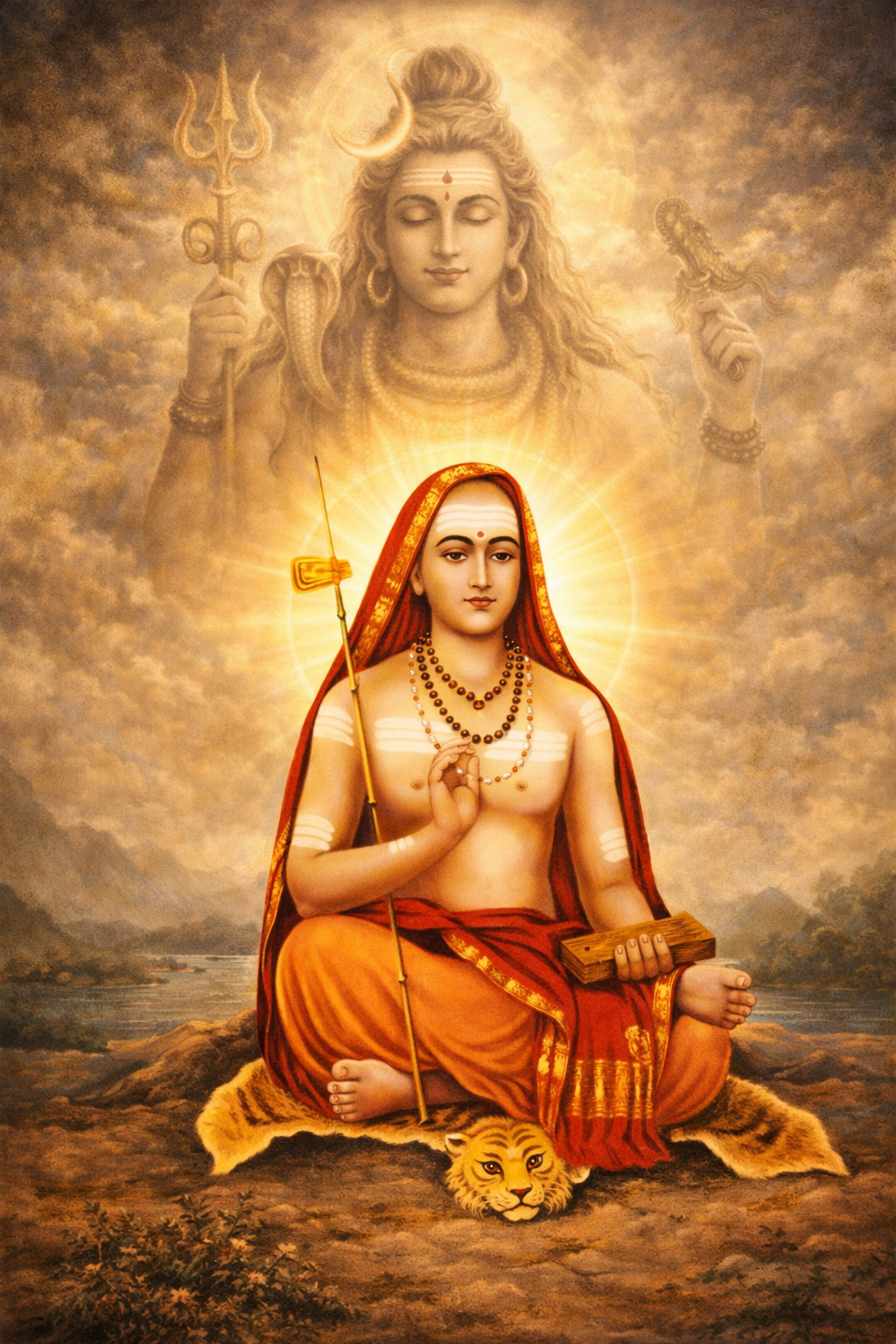
Adi Shankaracharya
Adi Shankaracharya is one of India greatest spiritual reformers, known for revitalizing Advaita Vedanta with extraordinary brilliance at a young age. Through commentaries on Upanishads, Bhagavad Gita, and Brahma Sutras, he restored philosophical clarity to the quest for liberation. His life combined scholarship, renunciation, debate, and devotional depth.
Adi Shankaracharya taught that the essential identity of Atman and Brahman is realized through discrimination, contemplation, and direct insight. He harmonized temple worship, monastic discipline, and non-dual inquiry, creating a balanced civilizational legacy. At MPYPCP, his ideal inspires intellectual rigor joined with spiritual humility.
Adi Shankaracharya (c. 8th century CE) is documented through his own Sanskrit corpus and hagiographies such as the Shankaradigvijaya. His commentaries (bhashyas) on the principal Upanishads, the Bhagavad Gita, and the Brahma Sutras constitute the foundational texts of Advaita Vedanta, arguing that Brahman alone is real and that Atman is identical with Brahman, knowable through shravana, manana, and nididhyasana. Works like Vivekachudamani and Atmabodha distill discriminative wisdom (viveka) for seekers, while his stotras (e.g., Bhaja Govindam) demonstrate integration of devotion with jnana. Adi Shankaracharya is also credited with organizing Dashanami sannyasa orders and mathas at Sringeri, Puri, Dwaraka, and Badrinath, institutional anchors for preserving Vedic and yogic teaching. His revival of non-dual inquiry profoundly shaped how later yoga lineages articulate moksha and Self-knowledge.
Life & Legacy
Adi Shankaracharya travelled across India to revive philosophical dialogue and spiritual coherence. His life mission was to remove confusion and restore the centrality of Self-knowledge.
He engaged in rigorous debates not for personal victory but for restoration of truth-oriented discourse. This spirit of respectful intellectual clarity remains vital in modern education.
Core Teachings
He emphasized viveka, vairagya, and disciplined inquiry as prerequisites for non-dual realization. Knowledge, for him, is transformative insight rather than mere textual accumulation.
Adi Shankaracharya devotional hymns show that non-dual insight and devotion are compatible, not opposed. This integrated vision prevents dry intellectualism in spiritual paths.
Contribution to Yoga
Adi Shankaracharya (c. 8th century CE) revitalized Advaita Vedanta and organized the Dashanami Sannyasa order, shaping how yoga and meditation are practiced in monastic India. His commentaries on the Brahma Sutras, Upanishads, and Bhagavad Gita integrate Jnana Yoga with disciplined sannyasa life, influencing Himalayan ashrams to this day.
Works such as Yoga Taravali (attributed) and Soundarya Lahari bridge Hatha–Tantra symbolism with non-dual realization. Adi Shankaracharya's emphasis on viveka (discrimination) and vairagya aligns with Maharshi Patanjali's yama–niyama spirit; his hymn Bhaja Govindam warns against mere asana without inner knowledge, a critique still relevant in commercial yoga debates.
The four mathas (Sringeri, Puri, Dwarka, Badrinath) he established anchor pilgrimage–yoga tourism and guru traditions cited in AYUSH–Ministry of Tourism yoga trails. Adi Shankaracharya remains a touchstone for philosophy modules in YCB Level 3 and university yoga degrees worldwide.
Popular Yoga Contributions
- Reviver of Advaita Vedanta and Jnana Yoga monasticism
- Commentaries on Gita, Upanishads, Brahma Sutras
- Dashanami sannyasa, organizational backbone of Himalayan yoga
- Yoga Taravali, synthesis of yoga practice and non-dual wisdom
- Bhaja Govindam, reminder that yoga is more than body culture
- Four mathas linking pilgrimage, ashram life, and modern yoga tourism
Relevance at MPYPCP
At MPYPCP, Adi Shankaracharya ideal supports deep study, reflective contemplation, and principled living. Students learn to combine reason, devotion, and disciplined practice.
MPYPCP draws from his model to cultivate teachers who are both philosophically grounded and spiritually sensitive. The goal is authentic guidance rooted in wisdom and compassion.
Authentic Sources & References
- Brahma Sutra Bhashya and Upanishad bhashyas, systematic Advaita exegesis
- Bhagavad Gita Bhashya, karma, bhakti, and jnana harmonized under non-dual aim
- Vivekachudamani, Atmabodha, Upadesasahasri, prakriya for viveka and Self-inquiry
- Shankaradigvijaya and matha traditions, biography and monastic institutional legacy
- Dashanami sannyasa and Vedantic gurukulas, preservation of Vedic-yogic pedagogy
Key Highlights
- Reviver of Advaita Vedanta in classical India
- Authoritative commentator on major Vedantic scriptures
- Champion of Jnana Yoga and discriminative inquiry
- Integrated devotion with non-dual realization
- Established enduring monastic and teaching lineages
आदि शंकराचार्य
आदि शंकराचार्य भारत के महान आध्यात्मिक पुनरुत्थानकर्ताओं में अग्रणी हैं, जिन्होंने अल्पायु में ही अद्वैत वेदांत को अद्भुत तेजस्विता के साथ पुनः प्रतिष्ठित किया। उपनिषद, भगवद्गीता और ब्रह्मसूत्र पर उनके भाष्यों ने मोक्षमार्ग को दार्शनिक स्पष्टता प्रदान की। उनका जीवन विद्वत्ता, संन्यास, शास्त्रार्थ और भक्ति की संतुलित धारा का अद्वितीय उदाहरण है।
आदि शंकराचार्य ने सिखाया कि आत्मा और ब्रह्म की एकता का बोध विवेक, मनन और प्रत्यक्ष अनुभूति से होता है। उन्होंने उपासना, मठपरंपरा और अद्वैत चिंतन का सुंदर समन्वय किया, जिससे भारतीय आध्यात्मिक संस्कृति को स्थायी दिशा मिली। एमपीवाईपीसीपी में उनका आदर्श बौद्धिक कठोरता के साथ आध्यात्मिक विनम्रता को प्रेरित करता है।
आदि शंकराचार्य (लगभग ८वीं शती ई.) अपने संस्कृत ग्रंथों और शंकरदिग्विजय जैसी जीवन-गाथाओं से प्रमाणित हैं। प्रमुख उपनिषदों, भगवद्गीता और ब्रह्मसूत्र पर भाष्य अद्वैत वेदांत के आधारग्रंथ हैं, ब्रह्म ही सत्य, आत्मा ब्रह्म के सहरूप, श्रवण-मनन-निदिध्यासन से ज्ञेय। विवेकचूडामणि और आत्मबोध जैसे ग्रंथ विवेक सिखाते हैं; भज गोविन्दम आदि स्तोत्र भक्ति और ज्ञान का समन्वय दर्शाते हैं। दशनामी संप्रदाय और शृंगेरी, पुरी, द्वारका, बद्रीनाथ मठों की स्थापना का श्रेय उन्हें दिया जाता है। अद्वैत-पुनरुत्थान ने बाद की योग-परंपराओं में मोक्ष और आत्मज्ञान के निरूपण को गहराई दी।
जीवन और विरासत
आदि शंकराचार्य ने भारत भर में यात्राएँ कर दार्शनिक संवाद और आध्यात्मिक एकता को पुनर्जीवित किया। उनका उद्देश्य भ्रम का निवारण कर आत्मज्ञान की केंद्रीयता को पुनः स्थापित करना था।
उन्होंने शास्त्रार्थ को व्यक्तिगत विजय नहीं, सत्य की प्रतिष्ठा का माध्यम माना। सम्मानपूर्ण बौद्धिक स्पष्टता की यह परंपरा आज की शिक्षा में भी अत्यंत आवश्यक है।
मूल शिक्षाएँ
उन्होंने विवेक, वैराग्य और अनुशासित आत्मचिंतन को अद्वैत अनुभूति की अनिवार्य तैयारी बताया। उनके अनुसार ज्ञान केवल शाब्दिक सूचना नहीं, बल्कि रूपांतरकारी प्रत्यक्ष बोध है।
आदि शंकराचार्य के स्तोत्र दर्शाते हैं कि अद्वैत अनुभूति और भक्ति परस्पर विरोधी नहीं हैं। यह समेकित दृष्टि आध्यात्मिक मार्ग को शुष्क बौद्धिकता से बचाती है।
योग में योगदान
आदि शंकराचार्य (लगभग 8वी शताब्दी ई.) ने अद्वैत वेदांत का पुनरुत्थान किया और दशनामी संन्यास व्यवस्था का संगठन किया, जिससे भारतीय मठों में योग–ध्यान के अभ्यास का स्वरूप तय हुआ। ब्रह्मसूत्र, उपनिषद और भगवद्गीता पर उनकी टीकाएँ ज्ञानयोग को संन्यास-अनुशासन से जोड़ती हैं, हिमालयी आश्रमों तक प्रभाव।
योग तारावली (श्रेय) और सौन्दर्य लहरी जैसे ग्रंथ हठ–तंत्र प्रतीक को अद्वैत साक्षात्कार से जोड़ते हैं। विवेक–वैराग्य पर आदि शंकराचार्य का बल महर्षि पतंजलि के यम–नियम से मेल खाता है; भज गोविन्दम् केवल आसन बिना ज्ञान की चेतावनी, आज के व्यावसायिक योग विवाद में भी प्रासंगिक।
उनके चार मठ (शृंगेरी, पुरी, द्वारका, बद्रीनाथ) तीर्थ–योग पर्यटन और गुरु परंपराओं को आधार देते हैं, जिन्हें AYUSH–पर्यटन मंत्रालय योग मार्गों में उद्धृत किया जाता है। YCB स्तर 3 और विश्वविद्यालयी योग डिग्री के दर्शन मॉड्यूल में आदि शंकराचार्य अभी भी मानक हैं।
लोकप्रिय योग योगदान
- अद्वैत वेदांत और ज्ञानयोग संन्यास का पुनरुत्थान
- गीता, उपनिषद, ब्रह्मसूत्र पर टीकाएँ
- दशनामी संन्यास, हिमालयी योग की संस्थागत रीढ़
- योग तारावली, योग अभ्यास और अद्वैत ज्ञान का संश्लेषण
- भज गोविन्दम्, योग केवल शरीर संस्कृति नहीं
- चार मठ, तीर्थ, आश्रम जीवन और आधुनिक योग-पर्यटन
MPYPCP में प्रासंगिकता
एमपीवाईपीसीपी में आदि शंकराचार्य का आदर्श गहन अध्ययन, मनन और सिद्धांतनिष्ठ जीवन को बल देता है। विद्यार्थियों को तर्क, भक्ति और अनुशासन का संतुलित विकास सिखाया जाता है।
एमपीवाईपीसीपी इसी प्रेरणा से ऐसे योगशिक्षक तैयार करता है जो दार्शनिक रूप से स्पष्ट और आध्यात्मिक रूप से संवेदनशील हों। लक्ष्य ज्ञान और करुणा पर आधारित प्रामाणिक मार्गदर्शन है।
प्रामाणिक स्रोत और संदर्भ
- ब्रह्मसूत्रभाष्य और उपनिषद्भाष्य, व्यवस्थित अद्वैत मीमांसा
- गीताभाष्य, कर्म, भक्ति, ज्ञान का अद्वैतोन्मुख समन्वय
- विवेकचूडामणि, आत्मबोध, उपदेशसहस्री, विवेक और आत्मानुसंधान
- शंकरदिग्विजय और मठ-परंपरा, जीवन और संस्थागत विरासत
- दशनामी संन्यास और वेदांत गुरुकुल, वैदिक-योग शिक्षण का संरक्षण
मुख्य बिंदु
- शास्त्रीय भारत में अद्वैत वेदांत के महान पुनरुत्थानकर्ता
- प्रमुख वेदांतिक ग्रंथों के प्रामाणिक भाष्यकार
- ज्ञानयोग और विवेकपूर्ण आत्मअन्वेषण के समर्थक
- अद्वैत अनुभूति और भक्ति का संतुलित समन्वय
- दीर्घजीवी मठ और शिक्षापरंपराओं के संस्थापक