
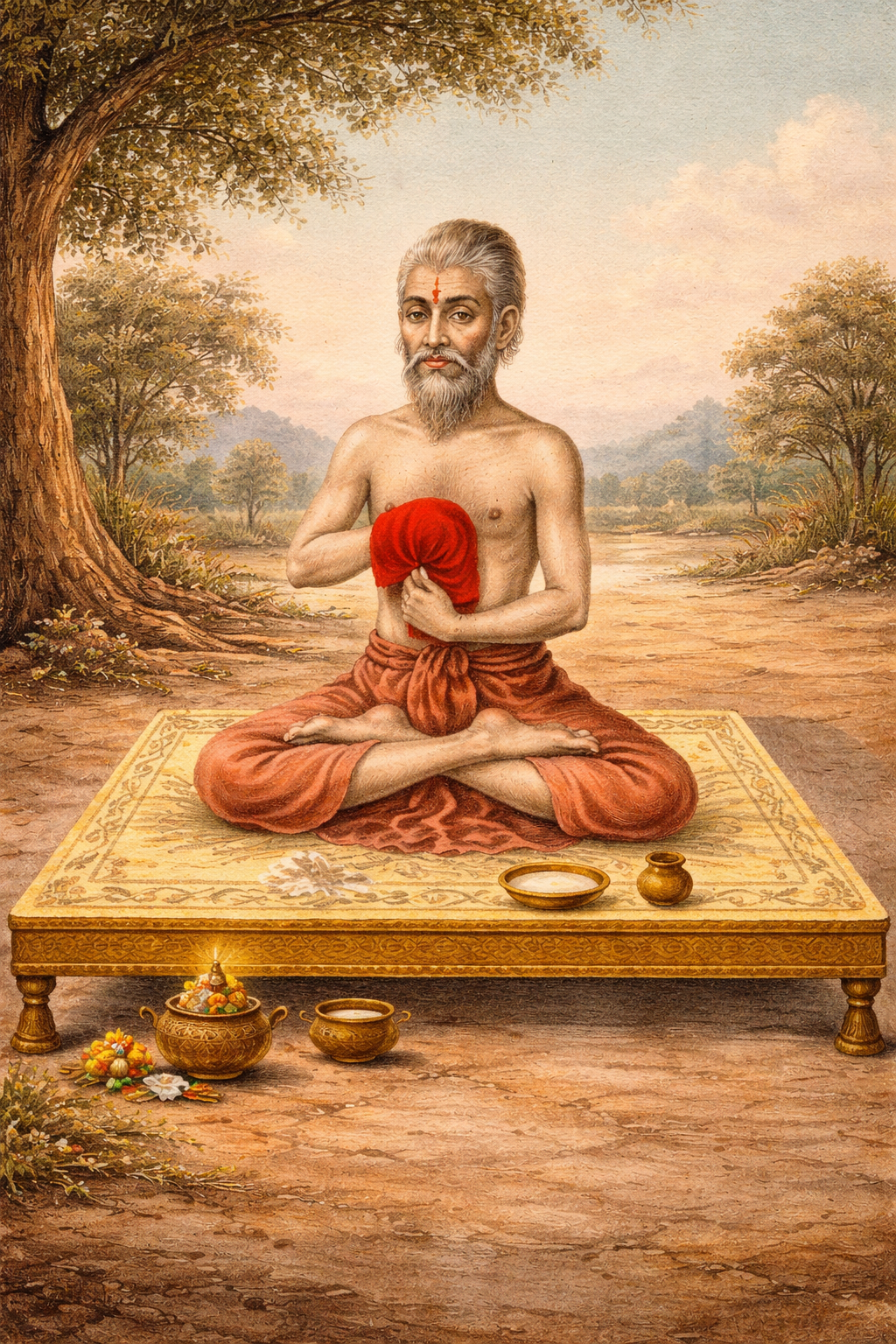
Maharshi Kapil
Maharshi Kapil is celebrated as the originator of Sankhya, one of the most influential philosophical systems of India. By distinguishing Purusha (pure consciousness) from Prakriti (material nature), he gave seekers a precise map for understanding bondage and liberation. His analytic clarity deeply shaped the evolution of classical yoga.
Maharshi Kapil contribution is not merely theoretical; it provides practical orientation for meditation and self-observation. When practitioners learn to witness mental fluctuations as movements of Prakriti, they begin to rest in the freedom of awareness. At MPYPCP, Maharshi Kapil ideal supports rigorous philosophical grounding for authentic yogic practice.
Maharshi Kapil is traditionally regarded as the founder of Samkhya, the dualistic philosophy of Purusha (consciousness) and Prakriti (matter) that Maharshi Patanjali's Yoga Sutras explicitly adopt (YS 1.24; Samkhya Karika influence). The Bhagavata Purana (Book 3) devotes extensive narrative to Maharshi Kapil's instruction of his mother Devahuti, expounding twenty-five tattvas, the three gunas, and liberation through discriminative knowledge (viveka). The Mahabharata (Shanti Parva) and Gita (10.26) list Maharshi Kapil among divine sages, while the classical Samkhya Karika of Ishvara Krishna (c. 4th–5th century CE) systematizes doctrines attributed to the Maharshi Kapil lineage. For yoga scholars, Maharshi Kapil provides the conceptual vocabulary, guna theory, prakriti-vikriti, kaivalya, that underlies both Samkhya and Raja Yoga's analysis of mind and suffering.
Life & Legacy
Maharshi Kapil philosophical vision arose in a period of intense inquiry into consciousness and existence. His Sankhya system organized spiritual knowledge into clear categories that aided disciplined understanding.
Maharshi Kapil approach is notable for intellectual precision without rejecting spiritual depth. He invited seekers to investigate experience directly rather than rely solely on inherited beliefs.
Core Teachings
He taught that confusion ends when one discriminates the seer from the seen. This viveka is central to yoga because suffering decreases as identification with changing phenomena weakens.
By clarifying the dynamics of sattva, rajas, and tamas, he offered a practical lens for self-regulation. This helps yoga practitioners understand habit patterns and cultivate balance.
Contribution to Yoga
Maharshi Kapil is revered as the founder of Sankhya philosophy, the enumerative science of purusha (consciousness) and prakriti (matter) that underpins much of yoga psychology. The Bhagavad Gita and Yoga Sutras presuppose Sankhya categories; without Maharshi Kapil's framework, Maharshi Patanjali's metaphysics is harder to grasp.
The Bhagavata Purana narrates Maharshi Kapil's teachings to his mother Devahuti as a sublime yoga of devotion and discrimination, blending Sankhya viveka with bhakti. Kapila Math and traditional commentaries preserve his status as a yogi–philosopher who mapped the mind's evolutes (vikaras) as obstacles to kaivalya.
Modern yoga therapy and mindfulness training increasingly cite Sankhya's gunas (sattva, rajas, tamas) for diet, mood, and practice planning, echoing AYUSH lifestyle guidelines. Maharshi Kapil thus remains essential in curricula linking philosophy to practice, including advanced YCB and university yoga departments worldwide.
Popular Yoga Contributions
- Founder of Sankhya, purusha/prakriti basis of yoga psychology
- Kapila Gita (Bhagavata), yoga taught to Devahuti
- Gunas (sattva, rajas, tamas) in lifestyle and practice design
- Philosophical foundation for Maharshi Patanjali and Bhagavad Gita
- Kapila Math lineage and classical commentaries
- Core topic in YCB philosophy and yoga-therapy modules
Relevance at MPYPCP
At MPYPCP, Maharshi Kapil legacy strengthens theoretical literacy in yoga training. Students learn to connect philosophical categories with lived meditative experience.
MPYPCP uses these insights to design curriculum that integrates theory, introspection, and disciplined practice. This creates teachers who can explain yoga with clarity and depth.
Authentic Sources & References
- Bhagavata Purana (Skandha 3), Kapila Gita to Devahuti on tattvas, gunas, and liberation
- Samkhya Karika of Ishvara Krishna, classical formulation of Purusha-Prakriti dualism
- Mahabharata and Bhagavad Gita (10.26), Maharshi Kapil listed among vibhuti and revered sages
- Yoga Sutras of Patanjali, Samkhya metaphysics presupposed in kaivalya and guna theory
- Mokshadharma and Shanti Parva passages, early epic references to Samkhya teachers
Key Highlights
- Founder of the Sankhya philosophical system
- Clarified distinction between Purusha and Prakriti
- Introduced guna-based understanding of mind and behavior
- Provided conceptual basis for classical yoga
- Promoted inquiry-based spiritual understanding
महर्षि कपिल
महर्षि कपिल भारतीय दर्शन के अत्यंत प्रभावशाली आचार्य माने जाते हैं और सांख्य दर्शन के प्रवर्तक रूप में प्रतिष्ठित हैं। पुरुष और प्रकृति के स्पष्ट भेद द्वारा उन्होंने बंधन और मुक्ति को समझने का सुसंगत दार्शनिक आधार दिया। उनकी विश्लेषणात्मक दृष्टि ने शास्त्रीय योग के विकास को गहराई से प्रभावित किया।
महर्षि कपिल का योगदान केवल सिद्धांत तक सीमित नहीं है, बल्कि ध्यान और आत्मनिरीक्षण के लिए व्यावहारिक दिशा भी देता है। जब साधक मनोवृत्तियों को प्रकृति का खेल समझकर साक्षीभाव विकसित करता है, तब चेतना की स्वतंत्रता का अनुभव संभव होता है। एमपीवाईपीसीपी में महर्षि कपिल का आदर्श योगाभ्यास के लिए दार्शनिक स्पष्टता और विवेकपूर्ण दृष्टि प्रदान करता है।
महर्षि कपिल परंपरागत रूप से सांख्य के प्रवर्तक माने जाते हैं, पुरुष और प्रकृति का द्वैतवाद जिसे महर्षि पतंजलि के योगसूत्र (१.२४) सहित सांख्यकारिका ने आत्मसात किया। भागवत पुराण (तृतीय स्कन्ध) में देवहूति को दिए उपदेश में पच्चीस तत्त्व, त्रिगुण और विवेकजन्य मोक्ष का विस्तृत निरूपण है। महाभारत (शान्तिपर्व) और गीता (१०.२६) में महर्षि कपिल दिव्य ऋषियों में गिने जाते हैं; ईश्वरयोगेश्वर योगेश्वर श्रीकृष्ण की सांख्यकारिका (लगभग ४–५ शती ई.) कपिल-परंपरा के सिद्धांतों को व्यवस्थित करती है। योग-विद्वानों के लिए महर्षि कपिल गुण-सिद्धांत, प्रकृति-विकृति और कैवल्य की अवधारणाएँ देते हैं, जिन पर राजयोग की मनोविश्लेषणा आधारित है।
जीवन और विरासत
महर्षि कपिल की दार्शनिक दृष्टि ऐसे काल में विकसित हुई जब चेतना और अस्तित्व पर गहन मंथन चल रहा था। सांख्य ने आध्यात्मिक ज्ञान को सुव्यवस्थित तत्त्वों में प्रस्तुत कर साधक को स्पष्ट बौद्धिक आधार दिया।
महर्षि कपिल की पद्धति आध्यात्मिक गहराई के साथ बौद्धिक सूक्ष्मता का अद्वितीय उदाहरण है। उन्होंने साधकों को परंपरागत मान्यताओं से आगे बढ़कर प्रत्यक्ष अनुभव की जांच करने का आग्रह किया।
मूल शिक्षाएँ
उन्होंने सिखाया कि द्रष्टा और दृश्य का विवेक ही दुख-निवृत्ति का आरंभ है। योग में यह विवेक इसलिए केंद्रीय है क्योंकि परिवर्तनशील वस्तुओं से तादात्म्य घटते ही मन में स्वतंत्रता बढ़ती है।
सत्त्व, रजस और तमस की कार्यप्रणाली समझाकर उन्होंने आत्मनियमन का व्यावहारिक उपकरण दिया। इससे योगसाधक अपनी प्रवृत्तियों को पहचानकर संतुलन विकसित कर सकता है।
योग में योगदान
महर्षि कपिल संख्य दर्शन के प्रवर्तक माने जाते हैं, पुरुष (चेतना) और प्रकृति (पदार्थ) की गणना-विज्ञान, जो योग मनोविज्ञान की अधिकांश नींव है। भगवद्गीता और योगसूत्र संख्य की श्रेणियाँ लेकर चलते हैं; महर्षि कपिल के ढाँचे के बिना महर्षि पतंजलि का आध्यात्मिक भू-तत्त्व समझना कठिन है।
भागवत पुराण में महर्षि कपिल की माता देवहूति को उपदेश, भक्ति और विवेक का उत्कृष्ट योग, संख्य-विवेक को भक्ति से जोड़ता है। महर्षि कपिल मठ और परंपरागत टीकाएँ उन्हें योगी–दार्शनिक के रूप में रखती हैं, जिन्होंने मन की विकृतियों को कैवल्य के विघ्न के रूप में मानचित्रित किया।
आधुनिक योग-चिकित्सा और माइंडफुलनेस प्रशिक्षण संख्य के गुण (सत्त्व, रजस, तामस) को आहार, मनोदशा और अभ्यास-योजना के लिए उद्धृत करता है, AYUSH जीवन-शैली दिशानिर्देशों की गूँज। महर्षि कपिल आज भी दर्शन को अभ्यास से जोड़ने वाले YCB और विश्वविद्यालयी योग विभागों के पाठ्यक्रम में अनिवार्य हैं।
लोकप्रिय योग योगदान
- संख्य के प्रवर्तक, पुरुष/प्रकृति, योग मनोविज्ञान की नींव
- महर्षि कपिल गीता (भागवत), देवहूति को योग-उपदेश
- गुण (सत्त्व, रजस, तामस) जीवन-शैली और अभ्यास में
- महर्षि पतंजलि और भगवद्गीता का दार्शनिक आधार
- महर्षि कपिल मठ परंपरा और शास्त्रीय टीकाएँ
- YCB दर्शन और योग-चिकित्सा मॉड्यूल का मुख्य विषय
MPYPCP में प्रासंगिकता
एमपीवाईपीसीपी में महर्षि कपिल की विरासत योगशिक्षा को मजबूत दार्शनिक आधार देती है। विद्यार्थियों को शास्त्रीय अवधारणाओं को ध्यान-अनुभव से जोड़ना सिखाया जाता है।
एमपीवाईपीसीपी इन सिद्धांतों के आधार पर ऐसा पाठ्यक्रम विकसित करता है जिसमें सिद्धांत, आत्मनिरीक्षण और नियमित अभ्यास एक-दूसरे को पूरक बनाते हैं।
प्रामाणिक स्रोत और संदर्भ
- भागवत पुराण (तृतीय स्कन्ध), देवहूति को कपिलगीता; तत्त्व, गुण, मोक्ष
- ईश्वरयोगेश्वर योगेश्वर श्रीकृष्ण की सांख्यकारिका, पुरुष-प्रकृति द्वैत का शास्त्रीय निरूपण
- महाभारत और भगवद्गीता (१०.२६), विभूति और ऋषि-सूची में कपिल
- महर्षि पतंजलि योगसूत्र, कैवल्य और गुण-सिद्धांत में सांख्य का आधार
- मोक्षधर्म और शान्तिपर्व, सांख्याचार्यों के प्रारंभिक महाकाव्य उल्लेख
मुख्य बिंदु
- सांख्य दर्शन के प्रवर्तक
- पुरुष और प्रकृति का स्पष्ट दार्शनिक भेद
- गुण-आधारित मनोवृत्ति समझ का विकास
- शास्त्रीय योगदर्शन की अवधारणात्मक नींव
- विवेकपूर्ण और अन्वेषणपरक साधना का समर्थन