
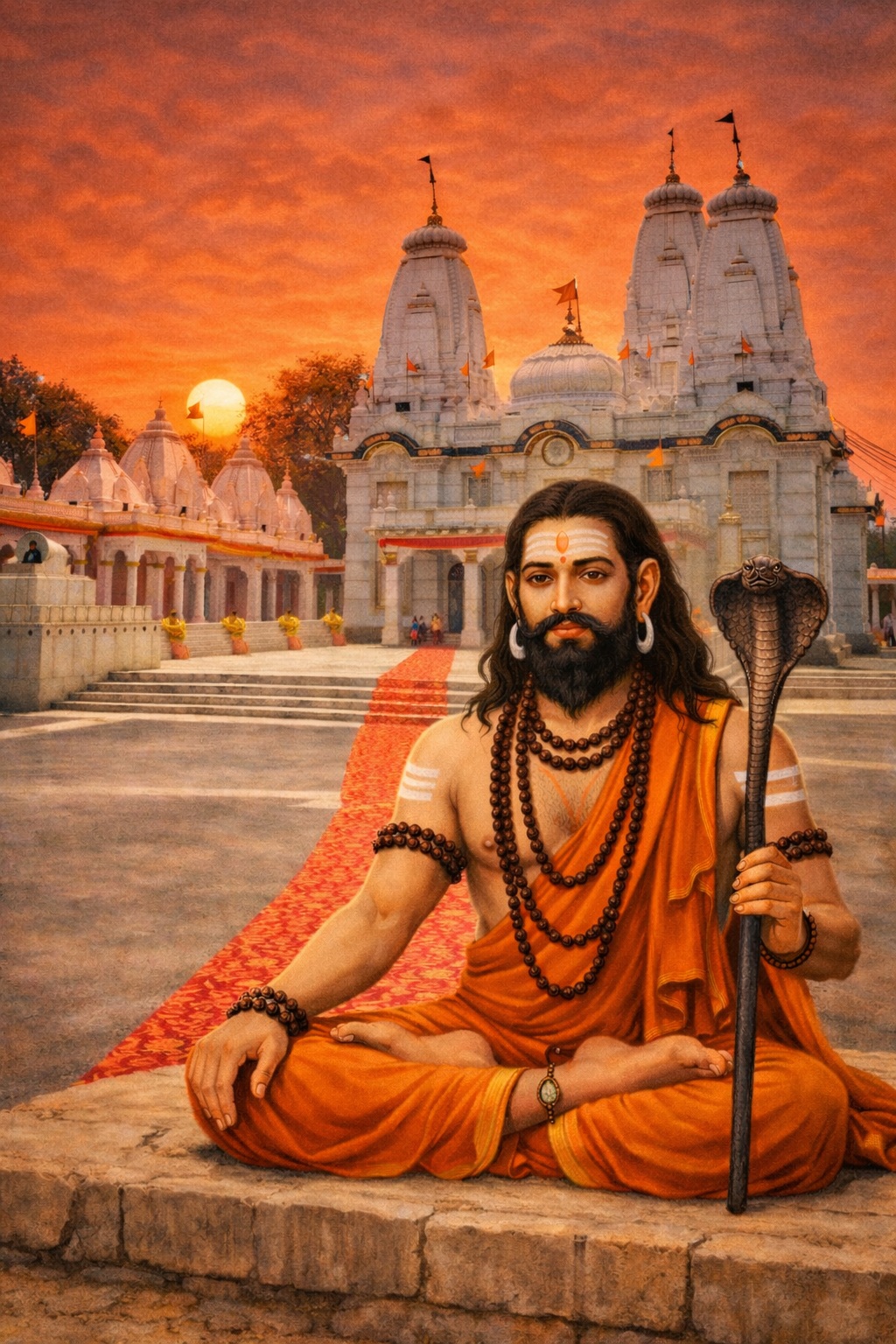
Maharshi Matsyendranath
Maharshi Matsyendranath is revered as a foundational figure of the Nath tradition, a stream that gave practical force to transformative yoga disciplines. Traditional narratives describe him as a master who received and transmitted esoteric knowledge with compassion and precision. His legacy marks a major turning point in the development of embodied yogic practice.
He helped connect inner realization with techniques involving body, breath, energy, and meditative absorption. Under his influence, yoga became a lived path accessible through sustained practice rather than mere philosophical abstraction. At MPYPCP, his ideal inspires disciplined sadhana rooted in direct experience and responsible guidance.
Maharshi Matsyendranath (Macchindranath) stands at the origin of the Nath (Kanphata) sampradaya, a siddha lineage that fused tantric insight with disciplined Hatha practice. Medieval texts such as the Matsyendrasamhita and Kaulajnananirnaya attribute to him teachings on kundalini, chakra, and guru-initiation (diksha), while Nepali and North Indian oral traditions preserve his association with Maharshi Matsyendranath temples and the founding myth of learning yoga within a fish (matsya). The Maharaj Gorakshanath tradition names him as guru of Goraksha; Buddhist Tibetan sources also recall Maitripa/Maharshi Matsyendranath in sahaja siddha contexts. Historians view him as a 9th–10th century bridge figure who made esoteric Kaula knowledge teachable through structured sadhana, preparing the ground for classical Hatha manuals and modern guru-shishya transmission of body-based yoga.
Life & Legacy
Maharshi Matsyendranath appears in tradition as a bridge between esoteric wisdom and teachable practice. His role established the early identity of Nath Yoga as a path of inner awakening through disciplined methods.
Maharshi Matsyendranath legacy also underscores the role of inner listening and silence in receiving higher instruction. He taught that subtle progress demands patience and ethical steadiness.
Core Teachings
He emphasized direct practice, guru-guided transmission, and purification of body-mind channels. This orientation strengthened the experiential core of yoga traditions.
His tradition values transformation through sustained effort, balanced lifestyle, and integrated practice. This continues to inform serious yoga training environments.
Contribution to Yoga
Maharshi Matsyendranath (Maharshi Matsyendranath, Macchindranath) is revered as a primal guru of the Nath Sampradaya and a pivotal figure in the evolution of Hatha Yoga and Kaula–Tantra lineages. Legends describe his initiation by Aadi Yogi Shiv in the depths of the ocean, symbolizing yoga's hidden transmission beyond ordinary society.
He is associated with the Kaulajnananirnaya, Maharaj Gorakshanath as disciple, and teachings on chakras, mudras, and Kundalini, core vocabulary of modern global yoga. Maharshi Matsyendranath temples and pan-Indian Nath pilgrimages (Nepal's Maharshi Matsyendranath jatra, Assam–Bengal traditions) keep his living cult alive.
The Nath–Kanphata yogis influenced Mughal-era ascetic culture and, through medieval texts, the Hatha Yoga Pradipika tradition. Today, scholars, AYUSH historians, and International Yoga Day exhibitions cite Maharshi Matsyendranath when tracing asana, bandha, and subtle-body maps from folklore to accredited yoga diplomas.
Popular Yoga Contributions
- Founder-guru of Nath Sampradaya, root of Hatha Yoga lineage
- Legend of Aadi Yogi Shiv's underwater initiation (fish-incarnation lore)
- Chakras, Kundalini, mudras in Kaula–Nath transmission
- Teacher of Maharaj Gorakshanath; Kaulajnananirnaya association
- Maharshi Matsyendranath jatra (Nepal), living festival tradition
- Bridge from Tantra to classical Hatha texts and modern asana
Relevance at MPYPCP
At MPYPCP, his example supports sincere apprenticeship, disciplined technique, and safety in advanced practices. Students learn to honor lineage while maintaining clarity and responsibility.
MPYPCP draws from this heritage to cultivate depth over display. Learners are encouraged to prioritize sincerity, gradual progression, and inner refinement.
Authentic Sources & References
- Matsyendrasamhita, early Nath tantric-yogic teachings on initiation and subtle body
- Kaulajnananirnaya, Kaula doctrines linked to Maharshi Matsyendranath lineage
- Nath Puranas and vernacular hagiography, guru of Maharaj Gorakshanath; matsya origin legend
- Nepal Macchindranath festival and temple tradition, living cultic and historical memory
- Siddha and sahaja literature (Buddhist and Hindu), cross-tradition siddha yoga context
Key Highlights
- Foundational master of Nath Sampradaya
- Integrated tantric insight with yogic discipline
- Emphasized guru-guided experiential practice
- Influenced early Hatha Yoga development
- Prepared lineage ground for Maharaj Gorakshanath tradition
महर्षि मत्स्येन्द्रनाथ
महर्षि मत्स्येन्द्रनाथ नाथ परंपरा के आदिस्थापक माने जाते हैं, जिसने योगसाधना को व्यावहारिक और रूपांतरणकारी शक्ति प्रदान की। परंपरागत कथाएँ उन्हें ऐसे सिद्ध आचार्य के रूप में वर्णित करती हैं जिन्होंने गूढ़ ज्ञान को करुणा और अनुशासन के साथ प्रसारित किया। उनकी विरासत ने देहाधारित योगपद्धतियों के विकास में निर्णायक भूमिका निभाई।
उन्होंने आंतरिक अनुभूति को शरीर, श्वास, ऊर्जा और ध्यान की सुव्यवस्थित तकनीकों से जोड़ा। उनके प्रभाव से योग केवल दार्शनिक विचार नहीं रहा, बल्कि निरंतर अभ्यास से प्राप्त होने वाला जीवंत मार्ग बना। एमपीवाईपीसीपी में उनका आदर्श प्रत्यक्ष अनुभव, अनुशासन और उत्तरदायी शिक्षण की भावना को सुदृढ़ करता है।
महर्षि मत्स्येन्द्रनाथ (मच्छिन्द्रनाथ) नाथ (कान्फटा) सम्प्रदाय के आदि सिद्ध माने जाते हैं, जिन्होंने तन्त्र की अंतर्दृष्टि को अनुशासित हठ-साधना से जोड़ा। मत्स्येन्द्रसंहिता और कौलज्ञाननिर्णय जैसे मध्यकालीन ग्रंथ कुण्डलिनी, चक्र और दीक्षा का उपदेश उन्हीं से जोड़ते हैं; नेपाल और उत्तर भारतीय परंपरा में महर्षि मत्स्येन्द्रनाथ मन्दिर और मत्स्य के भीतर योग-शिक्षा की कथा जीवित है। गोरक्ष-परंपरा उन्हें गोरक्ष के गुरु के रूप में याद करती है; तिब्बती सिद्ध साहित्य में भी मैत्रीपा/महर्षि मत्स्येन्द्रनाथ का उल्लेख मिलता है। इतिहासकार उन्हें ९–१० शती के सेतु-आचार्य मानते हैं, जिन्होंने कौल ज्ञान को शिक्षणयोग्य साधना में रूपांतरित कर हठ-ग्रंथों और आधुनिक गुरु-शिष्य शरीर-योग का आधार तैयार किया।
जीवन और विरासत
महर्षि मत्स्येन्द्रनाथ परंपरा में गूढ़ ज्ञान और शिक्षणयोग्य अभ्यास के बीच सेतु रूप में प्रतिष्ठित हैं। उनकी भूमिका ने नाथ योग को अनुशासित विधियों द्वारा आंतरिक जागरण के मार्ग के रूप में पहचान दी।
महर्षि मत्स्येन्द्रनाथ की विरासत यह भी सिखाती है कि उच्च साधना के लिए अंतर्मौन और सूक्ष्म श्रवण आवश्यक हैं। उन्होंने बताया कि आध्यात्मिक प्रगति धैर्य और नैतिक स्थिरता से ही स्थायी बनती है।
मूल शिक्षाएँ
उन्होंने प्रत्यक्ष साधना, गुरु-मार्गदर्शन और शरीर-मन के सूक्ष्म शोधन पर विशेष बल दिया। इस दृष्टि ने योगपरंपराओं की अनुभवप्रधान धारा को सशक्त बनाया।
उनकी परंपरा संतुलित जीवन, नियमित अभ्यास और क्रमिक रूपांतरण को महत्व देती है। यह दृष्टि आज के गंभीर योगप्रशिक्षण के लिए भी समान रूप से उपयोगी है।
योग में योगदान
महर्षि मत्स्येन्द्रनाथ (मत्स्येन्द्र, मच्छिन्द्रनाथ) नाथ संप्रदाय के आदि गुरुओं में और हठयोग तथा कौल–तंत्र परंपराओं के विकास में केंद्रीय हैं। कथाओं में समुद्र की गहराई में आदि योगी शिव से दीक्षा, सामान्य समाज से पर योग के गुप्त प्रसार का प्रतीक।
वे कौलज्ञाननिर्णय, महाराज गोरक्षनाथ के शिष्य, और चक्र, मुद्रा, कुण्डलिनी शिक्षाओं से जुड़े हैं, आधुनिक वैश्विक योग की मूल शब्दावली। महर्षि मत्स्येन्द्रनाथ मंदिर और अखिल भारतीय नाथ तीर्थ (नेपाल का महर्षि मत्स्येन्द्रनाथ जात्रा, असम–बंगाल परंपरा) उनकी जीवित उपासना रखते हैं।
नाथ–कानफटा योगियों ने मध्यकालीन ग्रंथों के माध्यम से हठ योग प्रदीपिका परंपरा और उस समय की संन्यास संस्कृति को प्रभावित किया। आज विद्वान, AYUSH इतिहासकार और अंतर्राष्ट्रीय योग दिवस प्रदर्शनियाँ आसन, बंध और सूक्ष्म-शरीर मानचित्रण के इतिहास में महर्षि मत्स्येन्द्रनाथ को उद्धृत करते हैं।
लोकप्रिय योग योगदान
- नाथ संप्रदाय के आदि गुरु, हठयोग वंश की जड़
- समुद्र में आदि योगी शिव-दीक्षा की परंपरा (मत्स्य अवतार कथा)
- कौल–नाथ परंपरा में चक्र, कुण्डलिनी, मुद्रा
- महाराज गोरक्षनाथ के गुरु; कौलज्ञाननिर्णय से संबंध
- महर्षि मत्स्येन्द्रनाथ जात्रा (नेपाल), जीवित उत्सव परंपरा
- तंत्र से हठ ग्रंथ और आधुनिक आसन तक की कड़ी
MPYPCP में प्रासंगिकता
एमपीवाईपीसीपी में उनका आदर्श प्रामाणिक दीक्षा, अनुशासित तकनीक और उन्नत अभ्यासों में सावधानी की संस्कृति को प्रेरित करता है। विद्यार्थियों को परंपरा के सम्मान के साथ उत्तरदायित्व का प्रशिक्षण दिया जाता है।
एमपीवाईपीसीपी इस परंपरा से गहराई को प्रदर्शन पर वरीयता देना सीखता है। विद्यार्थियों को ईमानदारी, क्रमिक प्रगति और आंतरिक परिष्कार का मार्ग अपनाने की प्रेरणा दी जाती है।
प्रामाणिक स्रोत और संदर्भ
- मत्स्येन्द्रसंहिता, दीक्षा और सूक्ष्म शरीर पर नाथ तान्त्रिक-योग उपदेश
- कौलज्ञाननिर्णय, मत्स्येन्द्र-परंपरा से जुड़े कौल सिद्धांत
- नाथ पुराण और लोक गाथा, गोरक्ष के गुरु; मत्स्य-उत्पत्ति कथा
- नेपाल महर्षि मत्स्येन्द्रनाथ मेला और मन्दिर, जीवित सांस्कृतिक स्मृति
- सिद्ध और सहज साहित्य, हिन्दू-बौद्ध सिद्धयोग संदर्भ
मुख्य बिंदु
- नाथ संप्रदाय के आधारभूत आचार्य
- तांत्रिक अंतर्दृष्टि और योग-अनुशासन का समन्वय
- गुरु-मार्गदर्शित अनुभवात्मक साधना पर बल
- प्रारंभिक हठयोग विकास पर गहरा प्रभाव
- महाराज गोरक्षनाथ परंपरा के लिए मजबूत आधार तैयार किया