
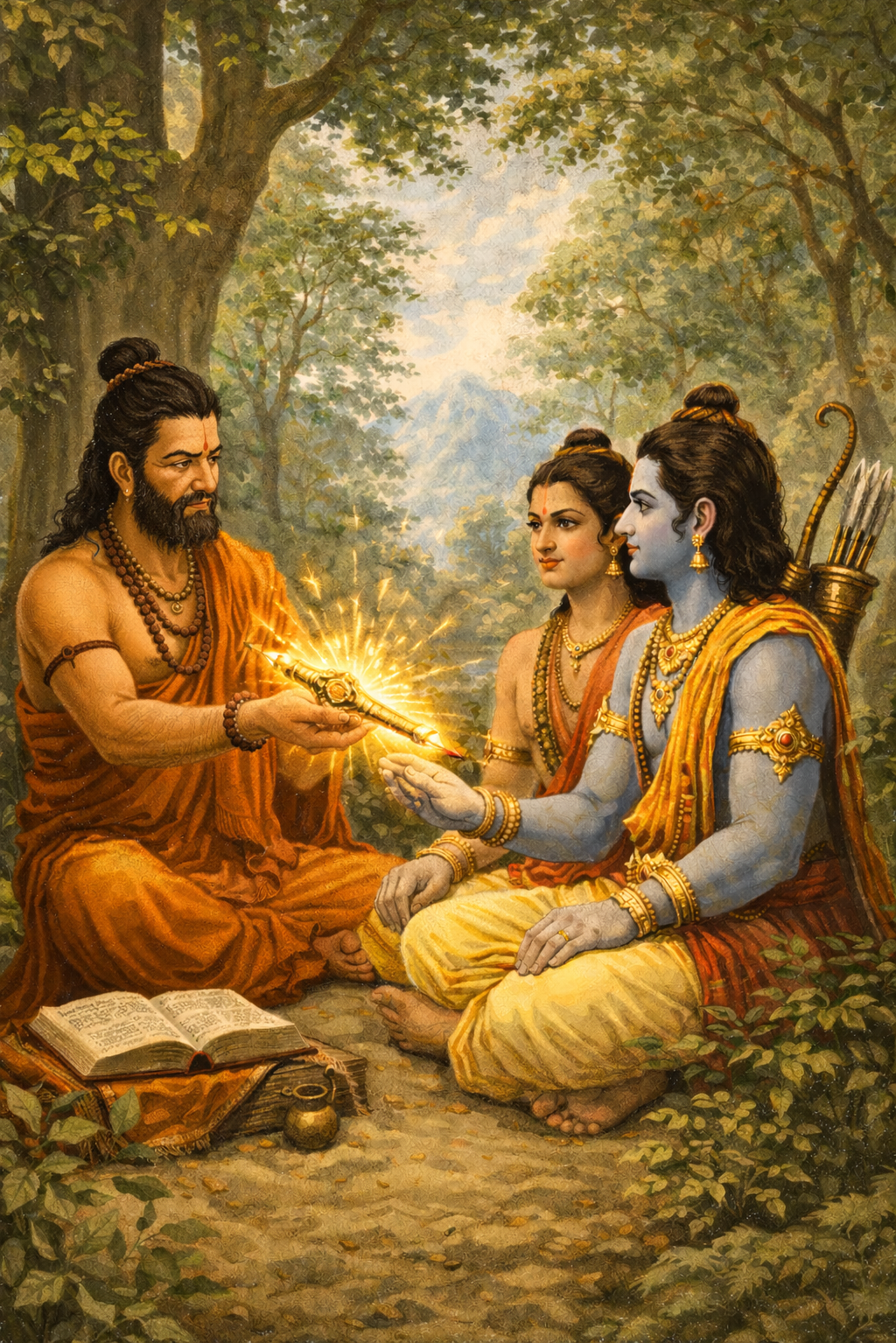
Maharshi Vashishta
Maharshi Vashishta stands among the most luminous of the Saptarishis, the seven great sages who received the science of yoga from Aadi Yogi Shiv. Celebrated in the Vedas, Ramayana, and Puranas, he is remembered as the kulaguru of the Solar dynasty and a master of both ritual wisdom and inner realization. His life exemplifies the integration of householdership and highest spiritual attainment.
Maharshi Vashishta is credited with profound contributions to Advaita Vedanta and yogic sadhana, teaching that the Self (Atman) and the Absolute (Brahman) are one. His dialogues and teachings emphasize ethical living, disciplined practice, and the power of tapas to purify mind and body. At MPYPCP, his ideal guides students toward holistic education rooted in Vedic values and practical yoga.
Maharshi Vashishta is among the most richly documented of the Saptarishis in Vedic and epic literature. The Rigveda attributes several hymns to Maharshi Vashishta and his sons (Mandala 7), presenting him as a fire-priest (hotr) and seer of mantras; the Ramayana (Bala and Ayodhya Kandas) casts him as kulaguru of the Ikshvaku dynasty and preceptor of Rama, while the Mahabharata and Puranas preserve his role in royal counsel and cosmic order. The Yoga Vashishta (also called Maha-Ramayana or Vashishta Ramayana), though composed in a later period, remains the classical Advaita dialogue attributed to his teaching tradition, expounding consciousness, dream states, and liberation through vichara. Together these sources establish Maharshi Vashishta as a bridge between Vedic ritual wisdom (karma-kanda), householder dharma, and the inward path that later Vedanta and yoga curricula inherit.
Life & Legacy
Born of divine origin according to tradition, Maharshi Vashishta emerged as a pillar of Vedic civilization. He presided over sacred fire rituals, composed hymns, and guided kings and seekers alike. His hermitage on the banks of the Sarasvati became a center of learning where disciples absorbed both mantra and meditation.
His legendary conflicts and reconciliations with Maharshi Vishwamitra symbolize the transformative power of sustained spiritual effort. Maharshi Vashishta's equanimity under provocation teaches patience and non-reactivity, qualities essential for yoga instructors.
Core Teachings
Maharshi Vashishta taught that true yoga begins with self-discipline (yama-niyama) and culminates in direct knowledge of the Self. He emphasized that external rituals gain meaning only when performed with inner awareness. His wisdom bridges karma-kanda and jnana-kanda, action and knowledge.
The Yoga Vashishta, attributed to his tradition, presents one of the most comprehensive dialogues on consciousness, dream states, and liberation in Indian philosophy. It remains a profound resource for advanced students of yoga and Vedanta.
Contribution to Yoga
Maharshi Vashishta stands among the greatest yogic preceptors of the Ramayana era, revered as kulaguru to the Ikshvaku dynasty and spiritual guide to Shri Rama. The Yoga Vashishta (Yoga Vashishtha / Laghu Yoga Vashishta), attributed to his dialogue with Rama, is one of the most influential Vedantic-yogic texts, teaching vairagya, self-inquiry, and the illusory nature of the world (maya) as practical aids to liberation.
His contribution integrates Rajayoga with Vedantic insight: controlled breath, steady posture, and disciplined mind are presented not as ends but as means to recognize the Self (Atman). The text's stories, such as the crow-and-pitcher allegory, make subtle metaphysics accessible to householders and renunciants alike, a pedagogical model still echoed in modern yoga philosophy courses.
Maharshi Vashishta's lineage connects Vedic fire-ritual culture with interiorized sadhana. For students at institutions aligned with AYUSH and Yoga Certification Board (YCB) standards, studying Maharshi Vashishta clarifies how classical Indian psychology (antahkarana), meditation (dhyana), and ethical restraint (yama–niyama precursors) were taught centuries before Maharshi Patanjali's codification.
Popular Yoga Contributions
- Yoga Vashishta, classic dialogue on Rajayoga and Vedanta
- Spiritual preceptor of Shri Rama; kulaguru of Ikshvaku line
- Teachings on vairagya, maya, and Self-realization through stories
- Bridge from Vedic ritual culture to interiorized meditation
- Influence on later Vedantic and yoga-philosophy curricula
- Referenced in comparative studies of Indian psychology and dhyana
Relevance at MPYPCP
MPYPCP honors Maharshi Vashishta as a model of the learned acharya who serves society through education. Faculty and students are reminded that yoga teaching carries the responsibility of character, clarity, and compassion.
Curriculum design at MPYPCP incorporates ethical foundations drawn from rishi ideals, encouraging students to embody integrity in personal practice and professional conduct as future yoga educators.
Authentic Sources & References
- Rigveda Mandala 7, hymns linked to Maharshi Vashishta and the Maharshi Vashishta lineage as mantra-seers
- Valmiki Ramayana, kulaguru of Dasharatha's house; spiritual guide of Rama
- Mahabharata and Puranic genealogies, Saptarishi lists and counsel to royal lineages
- Yoga Vashishta (Maha-Ramayana), extensive Advaita dialogues on consciousness and liberation
- Shatapatha Brahmana and ritual texts, context for Vedic priestly and ethical discipline
Key Highlights
- Revered Saptarishi and kulaguru of the Solar dynasty
- Foundation of Yoga and Advaita Vedanta teachings
- Exemplar of householder-spiritual integration
- Tradition of Yoga Vashishta on consciousness and liberation
- Model of equanimity and ethical leadership
महर्षि वशिष्ठ
महर्षि वशिष्ठ सप्तऋषियों, उन सात महान ऋषियों, में से एक हैं, जिन्हें आदि योगी शिव से योग विज्ञान प्राप्त हुआ। वेद, रामायण और पुराणों में उनकी महिमा का वर्णन है; वे सूर्यवंश के कुलगुरु और यज्ञ-ज्ञान तथा आंतरिक साक्षात्कार दोनों के सिद्ध साधक माने जाते हैं। उनका जीवन गृहस्थ धर्म और परम आध्यात्मिक सिद्धि के समन्वय का उदाहरण है।
महर्षि वशिष्ठ को अद्वैत वेदांत और योगिक साधना में गहन योगदान का श्रेय दिया जाता है; उन्होंने सिखाया कि आत्मा और ब्रह्म एक हैं। उनकी शिक्षाएँ नैतिक जीवन, अनुशासित अभ्यास और तप से मन-शरीर की शुद्धि पर बल देती हैं। MPYPCP में उनका आदर्श वैदिक मूल्यों और व्यावहारिक योग पर आधारित समग्र शिक्षा की दिशा में मार्गदर्शन करता है।
महर्षि वशिष्ठ वैदिक और महाकाव्य साहित्य में सप्तऋषियों के सर्वाधिक विस्तृत वर्णित ऋषियों में हैं। ऋग्वेद के सप्तम मण्डल में महर्षि वशिष्ठ और उनके पुत्रों से जुड़े अनेक सूक्त मिलते हैं, जहाँ वे अग्निहोत्री और मन्त्रद्रष्टा हैं; रामायण (बाल और अयोध्याकाण्ड) में वे इक्ष्वाकुवंश के कुलगुरु और राम के उपदेशक हैं, महाभारत और पुराणों में राजनीति और ऋत की स्थापना में उनकी भूमिका संरक्षित है। योग वशिष्ठ (महारामायण) की रचना उत्तरकालीन है, किन्तु अद्वैत संवाद की परंपरा उन्हीं से जुड़ी मानी जाती है, चेतना, स्वप्न और मोक्ष पर विचार-विमर्श। इन स्रोतों से महर्षि वशिष्ठ वैदिक यज्ञ-ज्ञान, गृहस्थ धर्म और बाद के वेदांत-योग पाठ्यक्रम की आंतरिक धारा के सेतु के रूप में प्रतिष्ठित होते हैं।
जीवन और विरासत
परंपरा के अनुसार दिव्य उत्पत्ति वाले महर्षि वशिष्ठ वैदिक सभ्यता के आधार स्तंभ बने। उन्होंने पवित्र अग्नि-यज्ञों का संचालन किया, स्तोत्र रचे और राजाओं-साधकों का मार्गदर्शन किया। सरस्वती तट पर उनका आश्रम शिक्षा का केंद्र था जहाँ शिष्य मंत्र और ध्यान दोनों सीखते थे।
महर्षि विश्वामित्र के साथ उनके प्रसिद्ध संघर्ष और समझौते निरंतर आध्यात्मिक प्रयास के परिवर्तनकारी सामर्थ्य का प्रतीक हैं। उनकी समभाव योग शिक्षकों के लिए धैर्य और अप्रतिक्रियाशीलता सिखाती है।
मूल शिक्षाएँ
महर्षि वशिष्ठ ने सिखाया कि सच्चा योग यम-नियम से आरंभ होकर आत्मज्ञान में परिणत होता है। बाह्य कर्मों का अर्थ तभी है जब भीतर से सजगता हो। उनका ज्ञान कर्मकांड और ज्ञानकांड, कर्म और ज्ञान, को जोड़ता है।
योग वशिष्ठ उनकी परंपरा से जुड़ा ग्रंथ चेतना, स्वप्न और मोक्ष पर भारतीय दर्शन की सर्वाधिक व्यापक चर्चाओं में से एक प्रस्तुत करता है।
योग में योगदान
महर्षि वशिष्ठ रामायण-युग के महानतम योगिक आचार्यों में से हैं, जिन्हें इक्ष्वाकु वंश के कुलगुरु और श्री राम के आध्यात्मिक मार्गदर्शक के रूप में पूजा जाता है। महर्षि वशिष्ठ–राम संवाद पर आधारित योग वशिष्ठ (लघु योग वशिष्ठ सहित) वेदांत-योग की प्रभावशाली ग्रंथों में से एक है, जो वैराग्य, आत्म-विचार और माया की स्वरूप को मोक्ष-साधन के रूप में सिखाती है।
उनका योगदान राजयोग को वेदांतिक दृष्टि से जोड़ता है, नियंत्रित श्वास, स्थिर आसन और एकाग्र मन को लक्ष्य नहीं, बल्कि आत्म-साक्षात्कार के साधन के रूप में प्रस्तुत किया गया है। कौए–घड़े की उपकथा जैसी कथाएँ सूक्ष्म दर्शन को गृहस्थ और संन्यासी दोनों के लिए सुलभ बनाती हैं, यह शिक्षण-रीति आज भी योग दर्शन पाठ्यक्रमों में दिखाई देती है।
महर्षि वशिष्ठ की परंपरा वैदिक अग्नि-संस्कृति को आंतरिक साधना से जोड़ती है। AYUSH और YCB मानकों से संरेखित संस्थानों के छात्रों के लिए महर्षि वशिष्ठ का अध्ययन यह स्पष्ट करता है कि अंतःकरण, ध्यान और नैतिक संयम महर्षि पतंजलि के संहिताकरण से सदियों पूर्व कैसे सिखाए जाते थे।
लोकप्रिय योग योगदान
- योग वशिष्ठ, राजयोग और वेदांत पर प्रसिद्ध संवाद-ग्रंथ
- श्री राम के आध्यात्मिक गुरु; इक्ष्वाकु वंश के कुलगुरु
- वैराग्य, माया और आत्म-साक्षात्कार की कथात्मक शिक्षा
- वैदिक संस्कृति से आंतरिक ध्यान-साधना की ओर सेतु
- बाद के वेदांत और योग-दर्शन पाठ्यक्रमों पर प्रभाव
- भारतीय मनोविज्ञान और ध्यान के तुलनात्मक अध्ययन में उल्लेख
MPYPCP में प्रासंगिकता
MPYPCP महर्षि वशिष्ठ को ऐसे विद्वान आचार्य के रूप में सम्मानित करता है जो शिक्षा के माध्यम से समाज की सेवा करते हैं।
MPYPCP का पाठ्यक्रम ऋषि-आदर्शों से नैतिक आधार समाहित करता है, जिससे छात्र भविष्य के योग शिक्षकों के रूप में चरित्र और स्पष्टता अपनाएँ।
प्रामाणिक स्रोत और संदर्भ
- ऋग्वेद सप्तम मण्डल, महर्षि वशिष्ठ-वंश से जुड़े सूक्त और मन्त्रद्रष्टा परंपरा
- वाल्मीकि रामायण, दशरथ-कुल के कुलगुरु; राम के आध्यात्मिक मार्गदर्शक
- महाभारत और पुराण वंशावली, सप्तऋषि सूचियाँ और राज-मन्त्रणा
- योग वशिष्ठ (महारामायण), चेतना और मोक्ष पर विस्तृत अद्वैत संवाद
- शतपथ ब्राह्मण, वैदिक यज्ञ और नैतिक अनुशासन का संदर्भ
मुख्य बिंदु
- पूज्य सप्तऋषि और सूर्यवंश के कुलगुरु
- योग और अद्वैत वेदांत शिक्षाओं की नींव
- गृहस्थ और आध्यात्मिक एकीकरण के उदाहरण
- चेतना और मोक्ष पर योग वशिष्ठ परंपरा
- समभाव और नैतिक नेतृत्व के आदर्श