
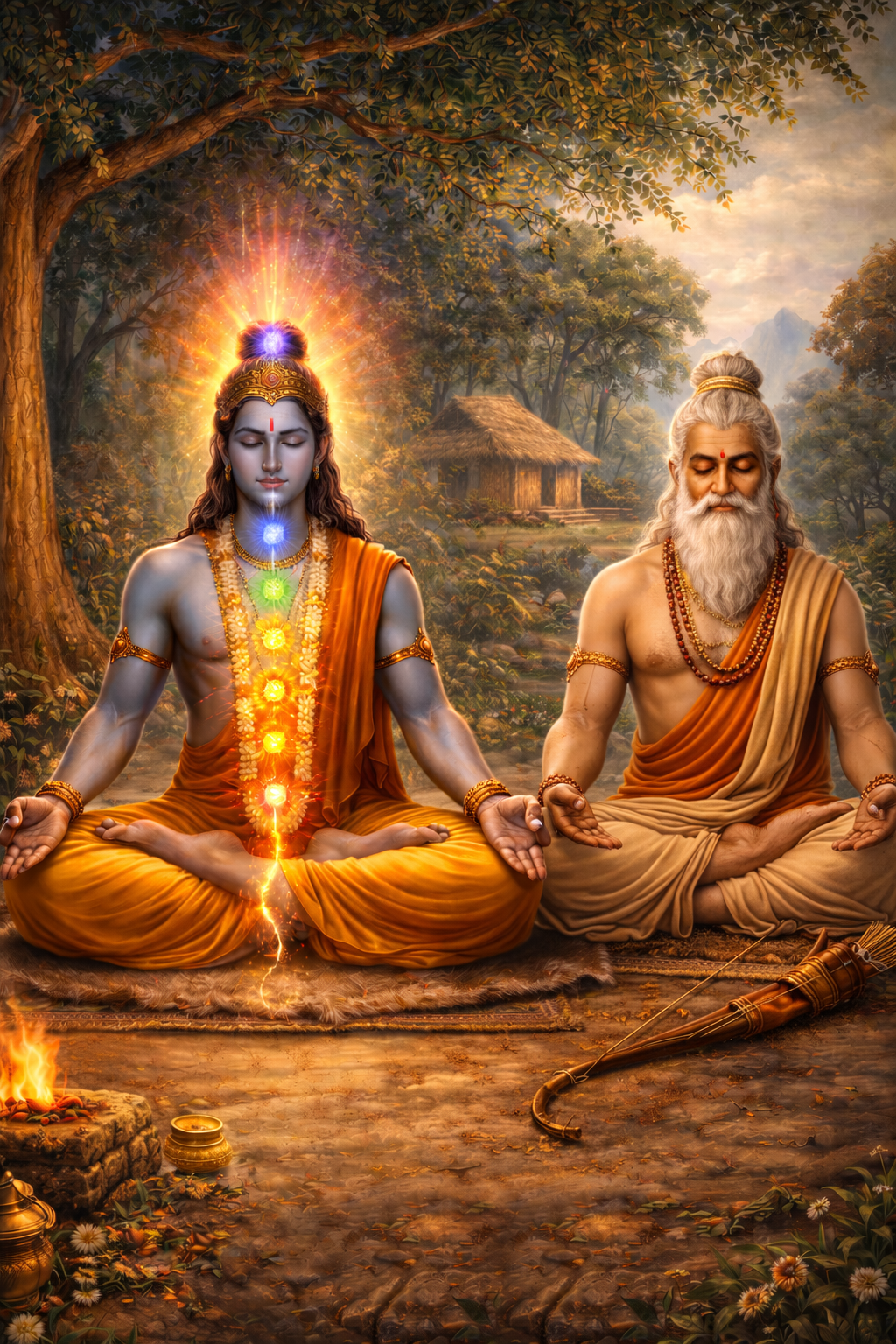
Maharshi Vishwamitra
Maharshi Vishwamitra is remembered as one of the most remarkable figures in Vedic history, whose life demonstrates the transformative power of discipline. Born as a king and later becoming a Brahmarshi through fierce tapas, he embodied the journey from external authority to inner mastery. His story continues to inspire seekers who wish to elevate their life through self-effort and unwavering resolve.
He is associated with profound Vedic revelations, especially the Gayatri Mantra tradition and deep practices of prana-based sadhana. Maharshi Vishwamitra taught that austerity is not self-denial alone, but a conscious refinement of thought, breath, and action. At MPYPCP, his ideal encourages students to cultivate determination, breath-awareness, and inner fire as foundations of yogic development.
Maharshi Vishwamitra's historical profile rests primarily on Vedic revelation and epic narrative. The Rigveda Mandala 3 is traditionally ascribed to Maharshi Vishwamitra and his clan, documenting his transition from Kshatriya king to Brahmarshi through tapas, a transformation echoed in the Ramayana (Bala Kanda) and Mahabharata. He is widely credited in tradition with revealing the Gayatri Mantra (Rigveda 3.62.10) to humanity, and the Aitareya Brahmana and later smriti literature discuss his rivalry and reconciliation with Maharshi Vashishta as a paradigm of ego-transcendence. Maharshi Vishwamitra's emphasis on pranayama, mantra, and fierce austerity appears in Puranic compendia and in the yoga-upanga literature that names him among masters of breath discipline. Scholars therefore treat him as a pivotal figure linking Vedic mantra-shastra, royal renunciation, and the ethos of self-made spiritual attainment (purushartha).
Life & Legacy
Maharshi Vishwamitra began as a powerful ruler but chose the path of renunciation after profound encounters with higher wisdom. His long austerities symbolize the capacity of human will to reshape destiny and character.
Classical narratives portray his journey as one of struggle, fall, reflection, and renewal, making him deeply relatable to aspirants. He stands as proof that setbacks in sadhana can become stepping stones to greatness.
Core Teachings
He emphasized tapas as a method to purify ego and awaken spiritual energy. In his tradition, breath discipline and mantra are not separate from moral discipline; they grow together.
Maharshi Vishwamitra also demonstrated that true strength is inner steadiness, not outward control. His approach to yoga affirms that disciplined breath and focused intention refine the mind for higher realization.
Contribution to Yoga
Maharshi Vishwamitra embodies the archetype of transformation through tapas, from king (Kaushika) to brahmarishi through relentless yogic discipline. His life illustrates that yoga is not birth-right but attained through sadhana, a message central to democratized modern yoga movements and YCB teacher-training ethics.
He is credited with revealing the Gayatri Mantra (Rigveda 3.62.10) to humanity after intense penance, making mantra–pranayama–dhyana accessible as daily sadhana for millions. The Trishanku episode and creation of a parallel heaven through tapasya symbolize the yogi's power to transcend ordinary causality through sustained practice.
Maharshi Vishwamitra's role as preceptor to Rama and Lakshmana in the Bala Kanda, teaching celestial weapons alongside inner discipline, mirrors the guru–shishya parampara that International Yoga Day celebrations often highlight. His story anchors the Vedic ideal that yoga and ethical kingship (rajadharma) can coexist.
Popular Yoga Contributions
- Revealer of the Gayatri Mantra, daily yoga sadhana for millions
- Archetype of tapas: king to brahmarishi through discipline
- Preceptor to Rama and Lakshmana in the Ramayana
- Trishanku legend, yogic will transcending ordinary limits
- Symbol of yoga open to all castes and backgrounds through effort
- Cited in mantra, japa, and pranayama training worldwide
Relevance at MPYPCP
For MPYPCP learners, Maharshi Vishwamitra represents perseverance in practice. His life teaches that sincere effort, repeated daily, can gradually transform both personality and consciousness.
At MPYPCP, his ideal is reflected in disciplined routines, consistent pranayama practice, and character-based education. Students are guided to combine effort with humility and purpose.
Authentic Sources & References
- Rigveda Mandala 3, hymns of the Maharshi Vishwamitra family; Gayatri (3.62.10) in traditional attribution
- Valmiki Ramayana (Bala Kanda), Trishanku, tapas, and elevation to Brahmarshi status
- Mahabharata and Aitareya Brahmana, rivalry with Maharshi Vashishta and moral of disciplined effort
- Puranas (e.g., Bhagavata, Vishnu Purana), life stories and mantra-transmission themes
- Pranayama and yoga-upanga traditions, Maharshi Vishwamitra named among masters of breath discipline
Key Highlights
- Transformed from king to Brahmarshi through tapas
- Revered master of Pranayama and disciplined sadhana
- Associated with the Gayatri Mantra tradition
- Embodies perseverance, self-effort, and inner fire
- Inspires committed daily yogic practice
महर्षि विश्वामित्र
महर्षि विश्वामित्र वैदिक परंपरा के उन महान व्यक्तित्वों में माने जाते हैं जिनका जीवन आत्मपरिवर्तन की अद्भुत शक्ति को दर्शाता है। राजा से ब्रह्मर्षि बनने तक की उनकी यात्रा बताती है कि दृढ़ संकल्प, तप और साधना से मनुष्य अपनी सीमाओं को पार कर सकता है। उनका आदर्श प्रत्येक साधक को बाह्य प्रतिष्ठा से ऊपर उठकर आंतरिक परिपक्वता की ओर ले जाता है।
महर्षि विश्वामित्र का नाम गायत्री मंत्र की परंपरा और प्राणाधारित योग साधना से विशेष रूप से जुड़ा है। उन्होंने सिखाया कि तप केवल कष्ट सहना नहीं, बल्कि विचार, श्वास और आचरण का शुद्ध अनुशासन है। एमपीवाईपीसीपी में उनका आदर्श विद्यार्थियों को निष्ठा, प्राणचेतना और आत्मबल के साथ योगमार्ग पर अग्रसर होने की प्रेरणा देता है।
महर्षि विश्वामित्र का ऐतिहासिक चित्र मुख्यतः वैदिक रचना और महाकाव्य पर आधारित है। ऋग्वेद तृतीय मण्डल परंपरागत रूप से विश्वामित्र-गोत्र से जुड़ा है, जहाँ राजा से ब्रह्मर्षि बनने की तपोयात्रा अंकित है, यही रूपांतरण रामायण (बालकाण्ड) और महाभारत में भी मिलता है। परंपरा में गायत्री मंत्र (ऋग्वेद ३.६२.१०) के प्रकटीकर्ता के रूप में उन्हें श्रद्धा मिली है; ऐतरेय ब्राह्मण और स्मृति साहित्य में महर्षि वशिष्ठ के साथ संघर्ष-समाधान अहंकार-पराजय का प्रतीक है। पुराणों और योगोपांग ग्रंथों में प्राणायाम, मंत्र और तीव्र तप पर उनका बल रहा है। अतः वे वैदिक मन्त्रशास्त्र, राजत्याग और पुरुषार्थ-आधारित साधना के महत्त्वपूर्ण सेतु माने जाते हैं।
जीवन और विरासत
महर्षि विश्वामित्र ने राजसत्ता से आरंभ करके तपस्वी जीवन को अपनाया और अंततः ब्रह्मर्षि पद प्राप्त किया। उनकी जीवनयात्रा दर्शाती है कि मनुष्य का संकल्प उसके स्वभाव और भाग्य दोनों को बदल सकता है।
परंपरागत आख्यानों में उनकी यात्रा संघर्ष, आत्ममंथन और पुनरारंभ से भरी है, इसलिए वे साधकों के लिए अत्यंत प्रेरक बनते हैं। वे बताते हैं कि साधना में आने वाली बाधाएँ भी उन्नति का आधार बन सकती हैं।
मूल शिक्षाएँ
उन्होंने तप को अहंकार-शुद्धि और चेतना-जागरण का प्रभावी साधन बताया। उनकी परंपरा में प्राणायाम, मंत्र और नैतिक अनुशासन एक-दूसरे के पूरक माने जाते हैं।
महर्षि विश्वामित्र ने दिखाया कि वास्तविक शक्ति भीतर की स्थिरता है, बाहरी नियंत्रण नहीं। उनके योगदृष्टिकोण में अनुशासित श्वास और एकाग्र संकल्प मन को उच्च अनुभूति के योग्य बनाते हैं।
योग में योगदान
महर्षि विश्वामित्र तप के माध्यम से रूपांतरण के आदर्श हैं, राजा कौशिक से अथक योगिक अनुशासन के द्वारा ब्रह्मर्षि बनने की गाथा। उनका जीवन दर्शाता है कि योग जन्म-अधिकार नहीं, साधना से प्राप्त होता है, यह संदेश आधुनिक लोकतांत्रिक योग आंदोलनों और YCB शिक्षक-प्रशिक्षण नैतिकता का केंद्र है।
कठोर तप के पश्चात् उन्होंने मानवता को गायत्री मंत्र (ऋग्वेद 3.62.10) प्रदान किया, जिससे मंत्र–प्राणायाम–ध्यान दैनिक साधना के रूप में लाखों लोगों के लिए सुलभ हुआ। त्रिशंकु-प्रसंग और तप से स्वर्ग-निर्माण की कथा सतत अभ्यास से साधारण कार्य-कारण को पार करने की योग-शक्ति का प्रतीक है।
बालकाण्ड में राम–लक्ष्मण के गुरु के रूप में महर्षि विश्वामित्र, बाह्य शस्त्र के साथ आंतरिक अनुशासन की शिक्षा, उस गुरु–शिष्य परंपरा को दर्शाते हैं जिसे अंतर्राष्ट्रीय योग दिवस अक्सर रेखांकित करता है। उनकी कथा वैदिक आदर्श स्थापित करती है कि योग और नैतिक राजधर्म सह-अस्तित्व में रह सकते हैं।
लोकप्रिय योग योगदान
- गायत्री मंत्र के प्रदाता, लाखों की दैनिक योग साधना
- तप का प्रतीक: राजा से ब्रह्मर्षि तक अनुशासन-यात्रा
- रामायण में राम–लक्ष्मण के गुरु
- त्रिशंकु-कथा, साधारण सीमाओं से परे योग-इच्छाशक्ति
- प्रयास से सभी के लिए खुला योग, जाति-पार की प्रेरणा
- विश्वभर के मंत्र, जप और प्राणायाम प्रशिक्षण में उल्लेख
MPYPCP में प्रासंगिकता
एमपीवाईपीसीपी के विद्यार्थियों के लिए महर्षि विश्वामित्र निरंतर प्रयास और धैर्य के आदर्श हैं। उनका जीवन सिखाता है कि नियमित साधना से व्यक्तित्व और चेतना दोनों का क्रमिक उत्थान होता है।
एमपीवाईपीसीपी में उनका आदर्श नियमित दिनचर्या, प्राणायाम और चरित्रनिर्माण आधारित शिक्षण में प्रतिबिंबित होता है। विद्यार्थियों को परिश्रम के साथ विनम्रता और उद्देश्यबोध विकसित करने का मार्ग दिया जाता है।
प्रामाणिक स्रोत और संदर्भ
- ऋग्वेद तृतीय मण्डल, विश्वामित्र-कुल के सूक्त; परंपरा में गायत्री (३.६२.१०)
- वाल्मीकि रामायण (बालकाण्ड), त्रिशंकु, तप और ब्रह्मर्षि पद
- महाभारत और ऐतरेय ब्राह्मण, महर्षि वशिष्ठ संबंध और अनुशासित पुरुषार्थ
- पुराण (भागवत, विष्णु पुराण आदि), जीवनकथा और मंत्र-प्रसार
- प्राणायाम और योगोपांग परंपरा, श्वास-साधना के आचार्य सूची में नाम
मुख्य बिंदु
- तप के बल से राजा से ब्रह्मर्षि बने
- प्राणायाम और अनुशासित साधना के आचार्य
- गायत्री मंत्र परंपरा से गहरा संबंध
- दृढ़ पुरुषार्थ और आंतरिक तेज के प्रतीक
- नियमित योगाभ्यास के लिए प्रेरणास्रोत