
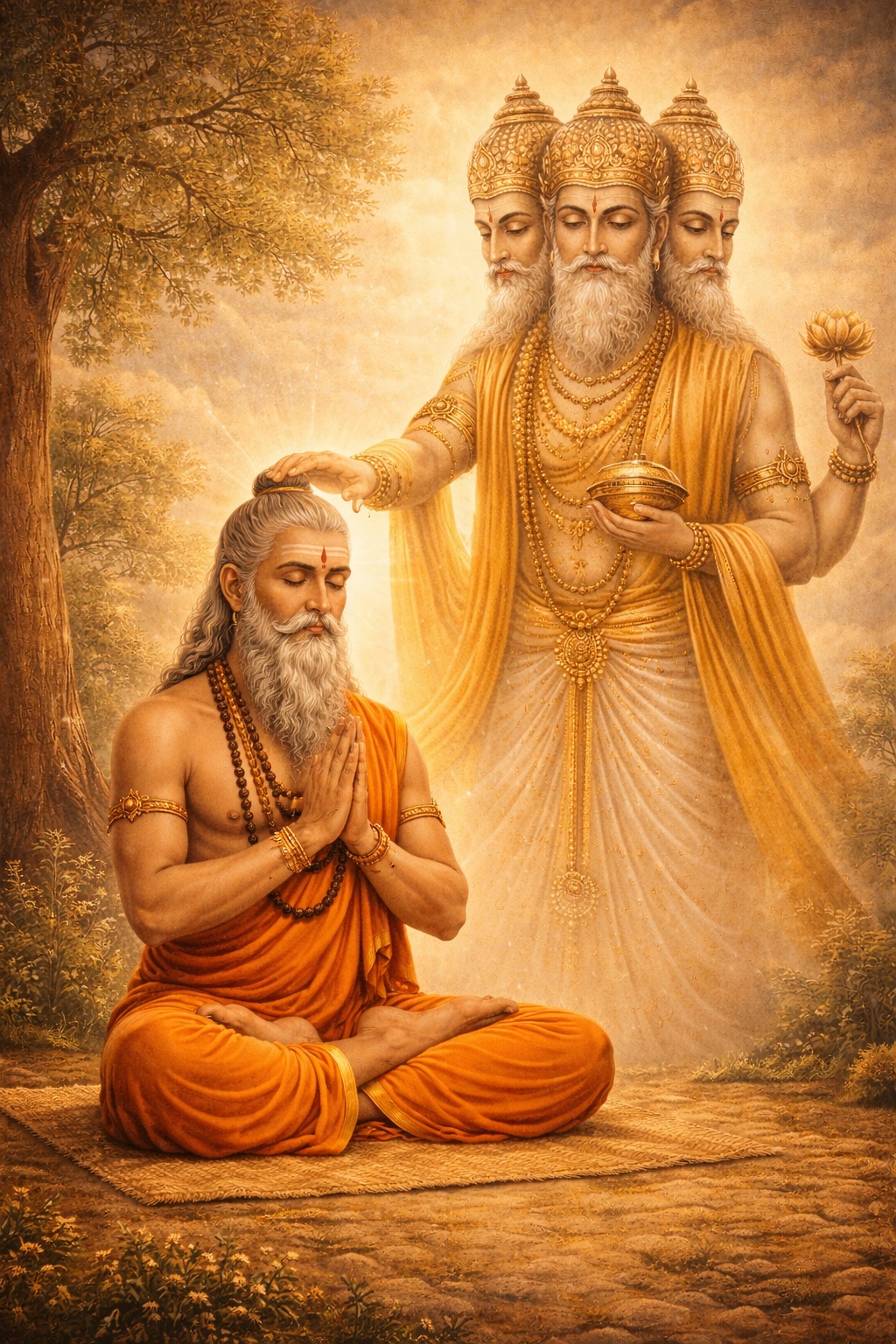
Rishi Angira
Rishi Angira is honored as one of the ancient seers whose insights helped shape the spiritual foundations of Vedic civilization. Counted among the Saptarishis in many traditions, he is associated with mantra, fire ritual, and contemplative wisdom that supported both social order and inner awakening.
His teachings reflect a balanced path where sacred sound, disciplined conduct, and meditative awareness work together. Rishi Angira did not treat spiritual life as separate from responsible living; rather, he showed how right action and inner knowledge can advance together. At MPYPCP, his legacy supports the integration of scriptural depth with practical yogic training.
Rishi Angira is attested from the earliest Vedic strata as a prototypical rsi and as eponym of the Angiras lineage (Angirasa), one of the great priestly families of the Rigveda. Hymns and invocations across the Rigveda, Atharvaveda, and Brahmanas associate the Angirasas with fire ritual (agni), luminous knowledge, and the transmission of mantra; the Mahabharata and multiple Puranas list Rishi Angira among the Saptarishis or as ancestor of seers who preserve cosmic order (rta). Texts such as the Manusmriti and Dharmashastra literature cite Angiras as a source of sacred instruction, while the Atharvaveda preserves charms and contemplative formulas linked to his name. In the history of yoga, Rishi Angira represents the integration of mantra, ethical conduct, and meditative insight that later Hatha and Vedantic schools treat as inseparable foundations of practice.
Life & Legacy
Rishi Angira occupies an important place in Vedic literature as a seer linked with hymns, sacred fire, and mantra power. His lineage nurtured generations of students who preserved oral wisdom with precision and reverence.
Traditional accounts also associate Rishi Angira with the transmission of cosmic principles through symbolic language and sacred recitation. His wisdom offered seekers a framework to move from outer worship to inner realization.
Core Teachings
He taught that mantra is effective when supported by purity of intention and disciplined conduct. For him, knowledge was not merely intellectual; it had to transform character and perception.
He affirmed that disciplined speech, truthful living, and focused mind are interconnected foundations of spiritual growth. This remains directly relevant for contemporary yoga educators.
Contribution to Yoga
Rishi Angira belongs to the primordial Saptarshi constellation and heads the Angiras lineage (Angirasa gotra), which shaped much of Vedic hymnody and ritual science. The Atharvaveda, the Veda most associated with healing, protective mantras, and practical wellbeing, is traditionally linked to the Angiras family, connecting yoga's therapeutic and wellness dimensions to ancient roots.
Angiras rishis are credited with hymns on breath, cosmic order (rita), and inner illumination that prefigure pranayama and dhyana. The Chandogya and Brihadaranyaka Upanishads preserve Angirasa teachings on prana as the bridge between body and Brahman, ideas Maharshi Patanjali and later Hatha yogis would systematize.
For global yoga culture, the Angiras legacy reminds us that yoga was never only posture: it included mantra therapy, ethical living, and community health, themes now echoed in AYUSH integrative medicine, yoga therapy diplomas, and WHO's traditional medicine frameworks alongside International Yoga Day outreach.
Popular Yoga Contributions
- Saptarshi Rishi Angira, Angiras lineage and Atharvaveda association
- Ancient roots of prana, mantra, and Upanishadic meditation
- Vedic foundation of yoga therapy and holistic wellbeing
- Angirasa prana teachings in Chandogya and Brihadaranyaka
- Link to modern AYUSH and yoga-therapy education
- Symbol of holistic yoga living celebrated on International Yoga Day
Relevance at MPYPCP
At MPYPCP, Rishi Angira stands for clarity in learning and sincerity in practice. Students are encouraged to develop both textual understanding and personal sadhana with equal commitment.
In MPYPCP context, his ideal supports careful pronunciation, ethical discipline, and reflective study. This strengthens both teaching quality and spiritual authenticity in future instructors.
Authentic Sources & References
- Rigveda and Atharvaveda, Angiras lineage hymns; fire, light, and mantra themes
- Brahmanas and Shrauta literature, Angirasa priests in Vedic ritual science
- Mahabharata and Puranas, Saptarishi lists; Rishi Angira as cosmic and genealogical figure
- Manusmriti and Dharmashastra citations, Angiras as authoritative teacher-tradition
- Atharvaveda Samhita, contemplative and protective formulas linked to Angiras
Key Highlights
- Revered Vedic seer associated with Saptarishi tradition
- Preserver of mantra, fire ritual, and contemplative wisdom
- Emphasized purity of intention in spiritual practice
- Linked outer discipline with inner realization
- Supports integrated scriptural and practical yoga learning
ऋषि अंगिरा
ऋषि अंगिरा प्राचीन वैदिक ऋषियों में अत्यंत आदरणीय हैं, जिनके दर्शन ने भारतीय आध्यात्मिक परंपरा की मजबूत नींव रखी। अनेक परंपराओं में उन्हें सप्तऋषियों में स्थान दिया गया है। मंत्र, अग्निविद्या और चिंतनपरक साधना के माध्यम से उन्होंने लोककल्याण और आत्मजागरण दोनों को दिशा दी।
उनकी शिक्षाएँ संतुलित जीवन का मार्ग प्रस्तुत करती हैं, जहाँ पवित्र ध्वनि, सदाचार और ध्यानपूर्ण सजगता एक साथ विकसित होते हैं। ऋषि अंगिरा ने आध्यात्मिकता को जीवन से अलग नहीं माना, बल्कि धर्मपूर्ण कर्म और आत्मबोध के समन्वय पर बल दिया। एमपीवाईपीसीपी में उनका आदर्श शास्त्रीय गहराई और व्यावहारिक योगशिक्षा के एकीकरण को प्रेरित करता है।
ऋषि अंगिरा ऋग्वेद की प्रारंभिक परत से ही आद्य ऋषि और अंगिरस गोत्र के नामदाता के रूप में प्रमाणित हैं। ऋग्वेद, अथर्ववेद और ब्राह्मणों में अंगिरसों का अग्नि-यज्ञ, ज्योतिर्मय ज्ञान और मंत्र-संप्रदाय से संबंध है; महाभारत और अनेक पुराणों में ऋषि अंगिरा सप्तऋषियों में अथवा ऋत-रक्षक ऋषि-वंश के पूर्वज के रूप में आते हैं। मनुस्मृति और धर्मशास्त्र अंगिरस को पवित्र उपदेश के स्रोत के रूप में उद्धृत करते हैं; अथर्ववेद में उनके नाम से जुड़े मंत्र और contemplative सूत्र मिलते हैं। योग-इतिहास में ऋषि अंगिरा मंत्र, सदाचार और ध्यान की एकीकरण-परंपरा के प्रतीक हैं, जिसे बाद की हठ और वेदांत शैलियाँ अभिन्न आधार मानती हैं।
जीवन और विरासत
ऋषि अंगिरा का वैदिक साहित्य में महत्वपूर्ण स्थान है, जहाँ वे मंत्रदृष्टा, अग्नियज्ञ और ऋषि परंपरा के प्रमुख स्तंभ रूप में वर्णित हैं। उनकी परंपरा ने अनेक पीढ़ियों तक मौखिक ज्ञान को शुद्धता और श्रद्धा से सुरक्षित रखा।
परंपरागत कथाओं में ऋषि अंगिरा को प्रतीकात्मक वैदिक भाषा और मंत्रोच्चार के माध्यम से ब्रह्मविद्या के प्रसारक रूप में भी माना गया है। उनकी शिक्षा साधक को बाह्य उपासना से आंतरिक अनुभूति की ओर ले जाती है।
मूल शिक्षाएँ
उन्होंने सिखाया कि मंत्र तभी फलदायी होता है जब उसके साथ शुद्ध संकल्प और अनुशासित आचरण हो। उनके लिए ज्ञान केवल बौद्धिक नहीं, बल्कि व्यक्तित्व और दृष्टि को रूपांतरित करने वाली शक्ति था।
उन्होंने स्पष्ट किया कि वाणी का संयम, सत्यनिष्ठ जीवन और एकाग्र मन आध्यात्मिक उन्नति की संयुक्त आधारशिलाएँ हैं। यह शिक्षा आज के योगशिक्षकों के लिए भी समान रूप से प्रासंगिक है।
योग में योगदान
ऋषि अंगिरा प्राचीन सप्तर्षि-मंडल के सदस्य हैं और अंगिरस वंश (अंगिरस गोत्र) के प्रमुख हैं, जिसने वैदिक छंद और अनुष्ठान-विज्ञान को गहराई से आकार दिया। अथर्ववेद, चिकित्सा, रक्षा-मंत्र और कल्याण से जुड़ा वेद, परंपरागत रूप से अंगिरस परिवार से जोड़ा जाता है, जो योग के चिकित्सीय और स्वास्थ्य आयामों को प्राचीन मूल से जोड़ता है।
अंगिरस ऋषियों को श्वास, ऋत और आंतरिक प्रकाश पर छंदों का श्रेय मिलता है, जो प्राणायाम और ध्यान का पूर्वाभास हैं। छान्दोग्य और बृहदारण्यक उपनिषद अंगिरस शिक्षाओं में प्राण को शरीर और ब्रह्म के बीच सेतु के रूप में रखती हैं, इन्हीं विचारों को महर्षि पतंजलि और बाद के हठयोगी ने व्यवस्थित किया।
वैश्विक योग संस्कृति के लिए अंगिरस विरासत याद दिलाती है कि योग केवल आसन नहीं था: मंत्र-चिकित्सा, नैतिक जीवन और सामुदायिक स्वास्थ्य भी उसमें थे, यही विषय आज AYUSH समन्वित चिकित्सा, योग-चिकित्सा पाठ्यक्रम और अंतर्राष्ट्रीय योग दिवस के माध्यम से WHO के पारंपरिक चिकित्सा ढाँचे में भी दिखते हैं।
लोकप्रिय योग योगदान
- सप्तर्षि ऋषि अंगिरा, अंगिरस वंश और अथर्ववेद परंपरा
- प्राण, मंत्र और उपनिषदिक ध्यान की प्राचीन नींव
- योग-चिकित्सा और स्वास्थ्य-कल्याण का वैदिक मूल
- छान्दोग्य–बृहदारण्यक में अंगिरस प्राण-शिक्षा
- आधुनिक AYUSH और योग-चिकित्सा से जुड़ाव
- अंतर्राष्ट्रीय योग दिवस पर समग्र योग-जीवन का प्रतीक
MPYPCP में प्रासंगिकता
एमपीवाईपीसीपी में ऋषि अंगिरा का आदर्श अध्ययन की स्पष्टता और साधना की सत्यनिष्ठा का प्रतीक है। विद्यार्थियों को शास्त्रबोध और व्यक्तिगत अभ्यास दोनों को समान महत्व देने की प्रेरणा दी जाती है।
एमपीवाईपीसीपी में उनका आदर्श शुद्ध उच्चारण, नैतिक अनुशासन और मननशील अध्ययन को बल देता है। इससे भावी शिक्षकों में शिक्षणकौशल और आध्यात्मिक प्रामाणिकता दोनों सुदृढ़ होते हैं।
प्रामाणिक स्रोत और संदर्भ
- ऋग्वेद और अथर्ववेद, अंगिरस-सूक्त; अग्नि, ज्योति और मंत्र-विषय
- ब्राह्मण और श्रौत साहित्य, वैदिक यज्ञ में अंगिरस पुरोहित परंपरा
- महाभारत और पुराण, सप्तऋषि सूची; ऋषि अंगिरा का वंश और ऋत-संबंध
- मनुस्मृति और धर्मशास्त्र, अंगिरस उपदेश-परंपरा के प्रामाणिक स्रोत
- अथर्ववेद संहिता, अंगिरस-नाम से जुड़े मंत्र और साधना-सूत्र
मुख्य बिंदु
- सप्तऋषि परंपरा से जुड़े पूज्य वैदिक ऋषि
- मंत्र, अग्निविद्या और चिंतनपरक ज्ञान के संरक्षक
- साधना में शुद्ध संकल्प पर विशेष बल
- बाह्य अनुशासन और आंतरिक अनुभूति का समन्वय
- शास्त्र और योगाभ्यास के समेकित अध्ययन के प्रेरक