
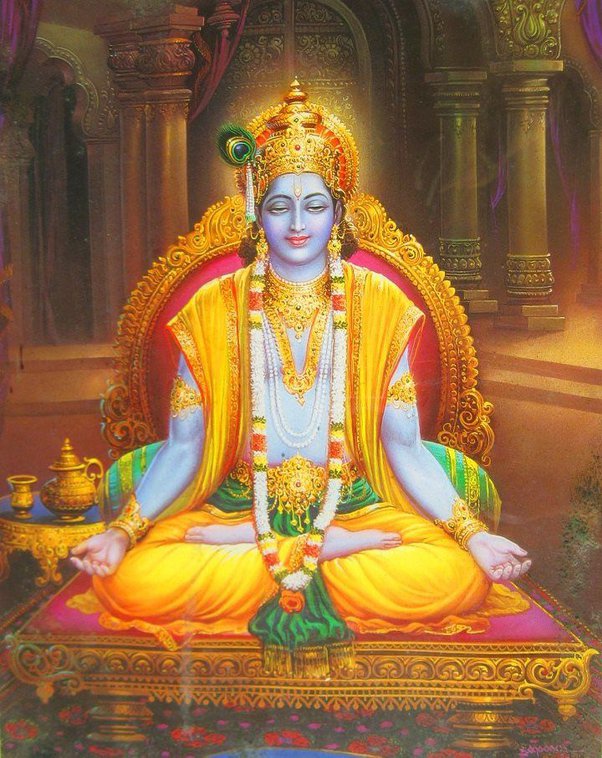
Yogeshwar Shri Krishna
Yogeshwar Shri Krishna is revered as the divine teacher who presented yoga as a complete art of living. On the battlefield of Kurukshetra, he transformed a moral crisis into a timeless dialogue on duty, devotion, wisdom, and liberation. His teachings in the Bhagavad Gita continue to guide seekers across traditions and eras.
Yogeshwar Shri Krishna offered a harmonized vision where action, love, and insight are not competing paths but complementary disciplines. He taught that yoga means steadiness in action, surrender in heart, and clarity in understanding. At MPYPCP, his ideal helps students cultivate balanced personality, ethical decision-making, and spiritually grounded leadership.
Yogeshwar Shri Krishna's status as Yogeshwara rests above all on the Bhagavad Gita, embedded in the Bhishma Parva of the Mahabharata, where he instructs Arjuna on Karma Yoga, Bhakti Yoga, Jnana Yoga, and the discipline of equanimity (samatva) in action. The Gita defines yoga as skill in action (2.50; 2.48) and describes the yogin's steadiness, diet, posture, and meditation (6.10–47), establishing a normative framework cited by Maharshi Patanjali commentators and Vedantic acharyas alike. The Harivamsa and Bhagavata Purana expand his lila theology and devotion, while the Brahma Sutras and classical commentaries (Adi Shankaracharya, Maharshi Ramanujacharya) interpret his teaching within Vedantic metaphysics. For yoga history, Yogeshwar Shri Krishna represents the integration of worldly duty, ethical leadership, and inner realization, precisely the synthesis MPYPCP and modern yoga pedagogy invoke when citing the Gita as a primary shastra.
Life & Legacy
Yogeshwar Shri Krishna life integrates statesmanship, friendship, compassion, and spiritual authority. As guide to Arjuna, he demonstrated how profound wisdom can be delivered in moments of practical urgency.
He redefined renunciation as inner freedom, not abandonment of action. This insight is especially relevant for modern practitioners balancing family, work, and sadhana.
Core Teachings
His central teaching is yoga of integration: perform duty without attachment, dedicate action to the Divine, and anchor the mind in equanimity. This synthesis prevents one-sided spiritual development.
Yogeshwar Shri Krishna also highlighted devotion as a transformative force that purifies intention and softens ego. Bhakti, in his teaching, matures into universal compassion and fearless trust.
Contribution to Yoga
Yogeshwar Shri Krishna is honored as Yogeshwar, the Lord of Yoga, especially in the Bhagavad Gita (chapters 6–7 and the famous verse 6.47), where he teaches Karma Yoga, Bhakti Yoga, Jnana Yoga, and the discipline of meditation (dhyana-yoga) to Arjuna on the battlefield of Kurukshetra. This text is among the most translated and studied yoga scriptures worldwide.
His teachings integrate action without attachment, equanimity, devotion, and discerning wisdom, a practical synthesis for householders that predates monastic-only models of yoga. The Gita's instructions on diet, posture, breath regulation, and steady mind (Gita 6.16–18) are cited in modern YCB syllabi and yoga teacher training programs globally.
Yogeshwar Shri Krishna's yoga is inseparable from ethical leadership and social duty. International Yoga Day events often quote the Gita; ISKCON and Vaishnava bhakti-yoga communities; and secular mindfulness movements all draw on his framework, making Yogeshwar Shri Krishna a unifying ideal in both Indian and diaspora yoga culture.
Popular Yoga Contributions
- Bhagavad Gita, Karma, Bhakti, Jnana and Dhyana Yoga (Yogeshwar)
- Gita Chapter 6, classic meditation and lifestyle instructions
- Equanimity, selfless action, and devotion as yoga paths
- Most cited scripture in global yoga teacher training
- Core text for International Yoga Day readings and cultural diplomacy
- Foundation of bhakti-yoga movements (e.g. ISKCON) worldwide
Relevance at MPYPCP
At MPYPCP, Yogeshwar Shri Krishna ideal supports education that joins ethics, responsibility, and contemplative practice. Students are trained to serve society while nurturing inner steadiness.
MPYPCP draws from this multidimensional approach to shape disciplined, empathetic, and self-aware yoga educators. The goal is both personal excellence and social contribution.
Authentic Sources & References
- Bhagavad Gita (Mahabharata, Bhishma Parva), Karma, Bhakti, Jnana Yoga; definition of yoga and dhyana
- Mahabharata, Yogeshwar Shri Krishna as diplomat, ruler, and spiritual teacher of the Pandavas
- Bhagavata Purana (Books 10–11), bhakti theology; Uddhava Gita on renunciation and discipline
- Harivamsa, genealogical and lila narratives complementing epic portrait
- Brahma Sutra and Vedantic commentaries, Gita integrated into systematic Vedanta
Key Highlights
- Revealed the timeless wisdom of Bhagavad Gita
- Integrated Karma Yoga, Bhakti Yoga, and Jnana Yoga
- Taught equanimity amid action and responsibility
- Redefined renunciation as inner freedom
- Model of compassionate and wise leadership
योगेश्वर श्रीकृष्ण
योगेश्वर श्रीकृष्ण को उस दिव्य गुरु के रूप में स्मरण किया जाता है जिन्होंने योग को जीवन की समग्र कला के रूप में स्थापित किया। कुरुक्षेत्र के संकटपूर्ण क्षण में उन्होंने अर्जुन के मोह को आत्मबोध में रूपांतरित करते हुए कर्तव्य, भक्ति, ज्ञान और मोक्ष का कालजयी संदेश दिया। भगवद्गीता की उनकी शिक्षा आज भी सभी साधकों के लिए प्रकाशपुंज है।
योगेश्वर श्रीयोगेश्वर योगेश्वर श्रीकृष्ण ने कर्म, प्रेम और विवेक को विरोधी नहीं, बल्कि पूरक साधन माना। उन्होंने सिखाया कि योग का अर्थ है कर्म में समत्व, हृदय में समर्पण और बुद्धि में स्पष्टता। एमपीवाईपीसीपी में उनका आदर्श विद्यार्थियों को संतुलित व्यक्तित्व, नैतिक निर्णयक्षमता और आध्यात्मिक नेतृत्व विकसित करने की प्रेरणा देता है।
योगेश्वर श्रीयोगेश्वर योगेश्वर श्रीकृष्ण की योगेश्वर की स्थिति सर्वोपरि भगवद्गीता पर आधारित है, जो महाभारत भीष्मपर्व में अंबद्ध है, यहाँ वे अर्जुन को कर्मयोग, भक्तियोग, ज्ञानयोग और कर्म में समत्व का उपदेश देते हैं। गीता योग को कर्म-कौशल (२.५०; २.४८) कहती है और योगी के आहार, आसन, ध्यान (६.१०–४७) का वर्णन करती है, जो पतंजलि-टीका और वेदांताचार्यों दोनों के लिए मानक रहा। हरिवंश और भागवत पुराण उनकी लीला और भक्ति-दर्शन को विस्तार देते हैं; ब्रह्मसूत्र और शंकर-महर्षि रामानुजाचार्य भाष्य गीता को वेदांतिक रूपरेखा में स्थापित करते हैं। योग-इतिहास में योगेश्वर श्रीकृष्ण कर्तव्य, नैतिक नेतृत्व और आंतरिक साक्षात्कार का समन्वय हैं, वही संश्लेषण जिसे आधुनिक योगशिक्षा गीता को प्राथमिक शास्त्र मानकर अपनाती है।
जीवन और विरासत
योगेश्वर श्रीयोगेश्वर श्रीयोगेश्वर योगेश्वर श्रीकृष्ण का जीवन राजधर्म, मैत्री, करुणा और आध्यात्मिक अधिकार का अद्भुत समन्वय है। अर्जुन के मार्गदर्शक के रूप में उन्होंने दिखाया कि व्यावहारिक संकट के क्षण में भी उच्चतम ज्ञान दिया जा सकता है।
उन्होंने संन्यास का अर्थ कर्मत्याग नहीं, बल्कि भीतर की आसक्ति से मुक्ति बताया। यह शिक्षा आज के गृहस्थ साधकों के लिए विशेष रूप से उपयोगी है।
मूल शिक्षाएँ
उनकी मूल शिक्षा समन्वित योग है: आसक्ति रहित कर्म करो, उसे ईश्वरार्पण करो, और मन को समत्व में स्थित रखो। यह दृष्टि साधना को एकांगी होने से बचाती है।
योगेश्वर श्रीयोगेश्वर योगेश्वर श्रीकृष्ण ने भक्ति को ऐसी रूपांतरणकारी शक्ति माना जो संकल्प को शुद्ध करती है और अहंकार को विनम्र बनाती है। उनकी भक्ति अंततः समदृष्टि और करुणा में परिणत होती है।
योग में योगदान
योगेश्वर श्रीकृष्ण को योगेश्वर के रूप में सम्मानित किया जाता है, विशेषकर भगवद्गीता (अध्याय 6–7 और प्रसिद्ध श्लोक 6.47) में, जहाँ वे अर्जुन को कर्मयोग, भक्तियोग, ज्ञानयोग और ध्यानयोग की शिक्षा देते हैं। यह ग्रंथ विश्व में सबसे अधिक अनुवादित और अध्ययन किए जाने वाले योग-ग्रंथों में है।
उनकी शिक्षा आसक्ति-रहित कर्म, समभाव, भक्ति और विवेकी ज्ञान को एकीकृत करती है, गृहस्थ के लिए व्यावहारिक संश्लेषण, जो केवल मठ-आधारित योग-मॉडल से पूर्व का है। गीता के आहार, आसन, प्राण नियंत्रण और स्थिर मन के निर्देश (6.16–18) आज YCB पाठ्यक्रम और विश्वभर के योग शिक्षक प्रशिक्षण में उद्धृत होते हैं।
योगेश्वर श्रीयोगेश्वर योगेश्वर श्रीकृष्ण का योग नैतिक नेतृत्व और सामाजिक कर्तव्य से अविभाज्य है। अंतर्राष्ट्रीय योग दिवस पर अक्सर गीता के श्लोक पढ़े जाते हैं; इस्कॉन और वैष्णव भक्ति-योग समुदाय; तथा धर्मनिरपेक्ष माइंडफुलनेस आंदोलन, सभी उनके ढाँचे पर आधारित हैं, जिससे योगेश्वर श्रीकृष्ण भारतीय और प्रवासी योग संस्कृति का एकीकृत आदर्श बनते हैं।
लोकप्रिय योग योगदान
- भगवद्गीता, कर्म, भक्ति, ज्ञान और ध्यानयोग (योगेश्वर)
- गीता अध्याय 6, ध्यान और जीवन-शैली के क्लासिक निर्देश
- समभाव, निष्काम कर्म और भक्ति योग-मार्ग के रूप में
- विश्वभर के योग शिक्षक प्रशिक्षण में सर्वाधिक उद्धृत ग्रंथ
- अंतर्राष्ट्रीय योग दिवस पाठ और सांस्कृतिक आदान-प्रदान का केंद्र
- विश्वव्यापी भक्ति-योग आंदोलनों (जैसे इस्कॉन) की नींव
MPYPCP में प्रासंगिकता
एमपीवाईपीसीपी में योगेश्वर श्रीयोगेश्वर श्रीयोगेश्वर योगेश्वर श्रीकृष्ण का आदर्श नैतिकता, उत्तरदायित्व और ध्यानपरक अभ्यास से युक्त शिक्षा को प्रेरित करता है। विद्यार्थियों को समाजसेवा के साथ आंतरिक स्थिरता विकसित करने का प्रशिक्षण मिलता है।
एमपीवाईपीसीपी इसी बहुआयामी दृष्टिकोण से ऐसे योगशिक्षक तैयार करता है जो अनुशासित, संवेदनशील और आत्मजागरूक हों। लक्ष्य व्यक्तिगत उत्कृष्टता के साथ सामाजिक योगदान भी है।
प्रामाणिक स्रोत और संदर्भ
- भगवद्गीता (महाभारत, भीष्मपर्व), कर्म, भक्ति, ज्ञानयोग; योग और ध्यान-विभाग
- महाभारत, पाण्डवों के मार्गदर्शक, राजनीतिज्ञ और योगेश्वर
- भागवत पुराण (दशम-एकादश स्कन्ध), भक्ति; उद्धवगीता में वैराग्य और साधना
- हरिवंश, वंश और लीला-कथा, महाकाव्य चित्र को पूरक
- ब्रह्मसूत्र और वेदांत भाष्य, गीता का व्यवस्थित दर्शन में स्थान
मुख्य बिंदु
- भगवद्गीता का कालजयी योगज्ञान प्रदान किया
- कर्मयोग, भक्तियोग और ज्ञानयोग का समन्वय किया
- कर्तव्य के बीच समत्व की शिक्षा दी
- संन्यास को आंतरिक मुक्त अवस्था के रूप में स्पष्ट किया
- करुणामय और विवेकपूर्ण नेतृत्व के आदर्श