
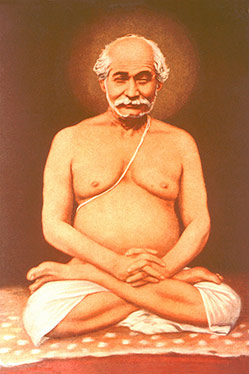
Lahiri Mahasaya
Lahiri Mahasaya is revered as the modern reviver of Kriya Yoga, especially for demonstrating that profound spirituality is possible without abandoning family and professional responsibilities. Living as a householder while maintaining intense inner discipline, he offered a practical model for seekers in ordinary social life. His quiet influence shaped a wide lineage of modern yogic awakening.
He taught that regular, sincere, and inward practice is more important than outer display. Lahiri Mahasaya guidance emphasized breath-based meditation, humility, and direct God-consciousness in daily life. At MPYPCP, his ideal inspires students to integrate yoga with responsibility, simplicity, and inner devotion.
Lahiri Mahasaya (Shyama Charan Lahiri Mahasaya, 1828–1895) is historically documented as the reviver of Kriya Yoga in modern India, initiated at Ranikhet in 1861 by Mahavatar Babaji as recorded in Paramahansa Yogananda's Autobiography of a Yogi and corroborated by Kriya lineage documents (e.g., Lahiri Mahasaya family manuscripts, Yukteswar's writings). A householder accountant in Varanasi, he taught Kriya pranayama to thousands across castes while maintaining professional and family life, an exemplar cited in modern yoga of integration rather than renunciation. His commentaries on the Bhagavad Gita and Upanishads (published as Lahiri Mahasaya Gita etc.) apply Kriya interpretation to classical Vedanta. Though not a Vedic rsi, Lahiri Mahasaya is firmly attested in 19th-century Bengali and pan-Indian spiritual history as the bridge between Nath-Kriya technique and contemporary global meditation movements.
Life & Legacy
Lahiri Mahasaya lived a disciplined spiritual life within ordinary social roles, changing assumptions about who can pursue higher yoga. His example brought deep practice into the heart of household life.
Lahiri Mahasaya discouraged spiritual pretension and promoted inward authenticity. He reminded seekers that genuine progress is measured by inner peace, clarity, and compassion.
Core Teachings
He emphasized consistency over intensity, teaching that daily kriya practice gradually transforms awareness. Spiritual growth, in his view, unfolds through sincerity and regularity.
His approach to practice was simple, precise, and deeply transformative. Breath, awareness, and devotion were harmonized into a path of direct interiorization.
Contribution to Yoga
Lahiri Mahasaya (Shyama Charan Lahiri Mahasaya, 1828–1895) revived Kriya Yoga, a precise pranayama–meditation system of inner breath control, for householders, breaking the secrecy of Himalayan monastic transmission. Initiated by Mahavatar Babaji at Kukuchina (Drongiri mountains), he taught thousands in Bengal while remaining a government accountant.
His lineage flows to Sri Yukteswar, Paramahansa Yogananda (Autobiography of a Yogi), and global Self-Realization Fellowship / Yogoda Satsanga, making Kriya Yoga one of the best-known Indian techniques in the West. Lahiri Mahasaya's commentaries on Maharshi Patanjali, the Gita, and Upanishads harmonize scripture with direct practice.
Today, Kriya circles, AYUSH-aware yoga historians, and International Yoga Day panels cite Lahiri Mahasaya as proof that yoga thrives in family and professional life, aligning with YCB's emphasis on accessible, ethical teaching rather than renunciation-only models.
Popular Yoga Contributions
- Reviver of Kriya Yoga for householders (Babaji lineage)
- Taught pranayama–meditation while living as a family man
- Guru of Sri Yukteswar; paramguru of Paramahansa Yogananda
- Autobiography of a Yogi, global popularization
- Scriptural commentaries uniting Gita, Sutras, and practice
- Symbol of yoga compatible with modern professional life
Relevance at MPYPCP
At MPYPCP, his model encourages students to sustain practice amid responsibilities. Yoga is taught as a living discipline integrated with work, family, and service.
MPYPCP draws from this legacy by supporting long-term, realistic, and value-based yoga education. Students are guided toward sustainable discipline rather than short-term enthusiasm.
Authentic Sources & References
- Autobiography of a Yogi (Yogananda), Ranikhet initiation; Lahiri Mahasaya as Kriya reviver (documented tradition)
- Lahiri Mahasaya manuscripts and Kriya Yoga lineage publications, teaching charts and commentaries
- Swami Sri Yukteswar and Paramahamsa Hariharananda records, direct disciples' historical accounts
- Lahiri Mahasaya's Sanskrit commentaries on Gita and Upanishads, integration of Kriya with Vedanta
- Studies of modern yoga (e.g., Goldberg, White), householder model in 19th-century Bengal
Key Highlights
- Reviver of Kriya Yoga in modern times
- Demonstrated high realization within householder life
- Emphasized regularity, humility, and inward practice
- Influenced major meditation-oriented yoga lineages
- Model for integrating spirituality with responsibility
लाहिड़ी महाशय
लाहिड़ी महाशय क्रियायोग के आधुनिक पुनर्जागरणकर्ता के रूप में पूज्य हैं, विशेषकर इसलिए कि उन्होंने गृहस्थ जीवन के भीतर रहते हुए उच्च आध्यात्मिक साधना का जीवन्त उदाहरण प्रस्तुत किया। परिवार और कर्मक्षेत्र की जिम्मेदारियों के साथ गहन अंतर्यात्रा को संभव बनाकर उन्होंने सामान्य जीवन जीने वाले साधकों के लिए सुलभ मार्ग दिखाया। उनकी शांत परंपरा ने आधुनिक योगजागरण को व्यापक प्रेरणा दी।
उन्होंने सिखाया कि बाह्य प्रदर्शन से अधिक महत्वपूर्ण है नियमित, ईमानदार और अंतर्मुखी साधना। लाहिड़ी महाशय ने श्वास-आधारित ध्यान, विनम्रता और दैनिक जीवन में ईशचेतना पर बल दिया। एमपीवाईपीसीपी में उनका आदर्श विद्यार्थियों को उत्तरदायित्व, सरलता और अंतर्भक्ति के साथ योगजीवन जीने की प्रेरणा देता है।
लाहिड़ी महाशय (श्यामाचरण लाहिड़ी, १८२८–१८९५) आधुनिक भारत में क्रियायोग के पुनर्जीवनकर्ता के रूप में ऐतिहासिक रूप से प्रमाणित हैं; १८६१ में रानीखेत में महावतार बाबाजी से दीक्षा का वर्णन परमहंस योगानन्द की आत्मकथा में मिलता है, क्रिया-परम्परा के पारिवारिक और युक्तेश्वर ग्रंथों से भी समर्थन मिलता है। काशी में गृहस्थ लेखाकार रहते हुए उन्होंने विभिन्न वर्गों के हजारों शिष्यों को क्रिया-प्राणायाम सिखाया, संन्यास के बिना साधना का आधुनिक उदाहरण। गीता और उपनिषदों पर उनकी टीकाएँ क्रिया-दृष्टि से वेदांत का अनुप्रयोग करती हैं। वैदिक ऋषि न होते हुए भी उन्नीसवीं शती के बंगाल और अखिल भारतीय आध्यात्मिक इतिहास में नाथ-क्रिया तकनीक और वैश्विक ध्यान आंदोलन के सेतु के रूप में उनका स्थान सुदृढ़ है।
जीवन और विरासत
लाहिड़ी महाशय ने सामान्य सामाजिक भूमिकाओं के भीतर अनुशासित आध्यात्मिक जीवन जीकर यह धारणा बदली कि उच्च योग केवल संन्यासियों के लिए है। उनके उदाहरण ने गृहस्थ जीवन के केंद्र में गहन साधना को प्रतिष्ठित किया।
लाहिड़ी महाशय ने आध्यात्मिक आडंबर का निषेध किया और अंत:प्रामाणिकता पर बल दिया। उनके अनुसार वास्तविक प्रगति का माप अंत:शांति, स्पष्टता और करुणा है।
मूल शिक्षाएँ
उन्होंने तीव्रता से अधिक निरंतरता को महत्व दिया और बताया कि दैनिक क्रियायोग अभ्यास से चेतना क्रमशः रूपांतरित होती है। उनके अनुसार साधना की प्रगति ईमानदारी और नियमितता से फलित होती है।
उनकी साधना-पद्धति सरल, सूक्ष्म और अत्यंत रूपांतरणकारी थी। श्वास, सजगता और भक्ति का समन्वय करके उन्होंने अंतर्मुखी जागरण का प्रभावी मार्ग दिया।
योग में योगदान
लाहिड़ी महाशय (श्यामा चरण लाहिड़ी, 1828–1895) ने क्रियायोग, आंतरिक श्वास नियंत्रण की सटीक प्राणायाम–ध्यान पद्धति, गृहस्थों के लिए पुनर्जीवित किया, हिमालयी मठीय गोपनीयता तोड़ी। महावतार बाबाजी से कुकुचीना (द्रोणगिरि) में दीक्षा प्राप्त कर उन्होंने बंगाल में हजारों को शिक्षा दी, सरकारी लेखाकार रहते हुए।
उनकी परंपरा श्री युक्तेश्वर, परमहंस योगानंद (एक योगी की आत्मकथा) और वैश्विक सेल्फ-रियलाइजेशन फेलोशिप / योगोदा सत्संग तक पहुँची, पश्चिम में क्रियायोग सर्वाधिक ज्ञात भारतीय विधियों में से एक। महर्षि पतंजलि, गीता और उपनिषद पर लाहिड़ी महाशय की टीकाएँ शास्त्र को प्रत्यक्ष अभ्यास से मिलाती हैं।
आज क्रिया मंडलियाँ, AYUSH-सचेत इतिहासकार और अंतर्राष्ट्रीय योग दिवस पैनल लाहिड़ी महाशय को प्रमाण देते हैं कि योग परिवार और व्यावसायिक जीवन में फलता-फूलता है, YCB के सुलभ, नैतिक शिक्षण पर बल के अनुरूप, केवल संन्यास-मॉडल नहीं।
लोकप्रिय योग योगदान
- गृहस्थों के लिए क्रियायोग का पुनरुत्थान (बाबाजी परंपरा)
- पारिवारिक जीवन में प्राणायाम–ध्यान शिक्षा
- श्री युक्तेश्वर के गुरु; योगानंद के परमगुरु
- एक योगी की आत्मकथा, वैश्विक लोकप्रियता
- गीता, सूत्र और अभ्यास को मिलाने वाली टीकाएँ
- आधुनिक व्यावसायिक जीवन के अनुकूल योग का प्रतीक
MPYPCP में प्रासंगिकता
एमपीवाईपीसीपी में उनका आदर्श विद्यार्थियों को जिम्मेदारियों के बीच साधना बनाए रखने की प्रेरणा देता है। योग को कार्य, परिवार और सेवा के साथ समन्वित जीवन-अनुशासन के रूप में सिखाया जाता है।
एमपीवाईपीसीपी इस विरासत से दीर्घकालिक, यथार्थवादी और मूल्याधारित योगशिक्षा को प्रोत्साहित करता है। विद्यार्थियों को क्षणिक उत्साह के स्थान पर टिकाऊ अनुशासन की दिशा दी जाती है।
प्रामाणिक स्रोत और संदर्भ
- योगानन्द की आत्मकथा, रानीखेत दीक्षा; क्रियायोग पुनर्जागरण का वर्णन
- लाहिड़ी महाशय पारिवारिक पाण्डुलिपियाँ और क्रिया प्रकाशन, उपदेश चार्ट और भाष्य
- युक्तेश्वर और हरिहरानन्द परमहंस के वृत्त, शिष्य-परम्परा के ऐतिहासिक साक्ष्य
- गीता और उपनिषद पर लाहिड़ी महाशय भाष्य, क्रिया दृष्टि से वेदांत
- आधुनिक योग इतिहास अध्ययन, उन्नीसवीं शती बंगाल में गृहस्थ साधना
मुख्य बिंदु
- आधुनिक काल में क्रियायोग के पुनर्जागरणकर्ता
- गृहस्थ जीवन में उच्च आध्यात्मिक सिद्धि का उदाहरण
- नियमितता, विनम्रता और अंतर्मुखी साधना पर बल
- ध्यानप्रधान योगपरंपराओं पर व्यापक प्रभाव
- उत्तरदायित्व और अध्यात्म के समन्वय के आदर्श