
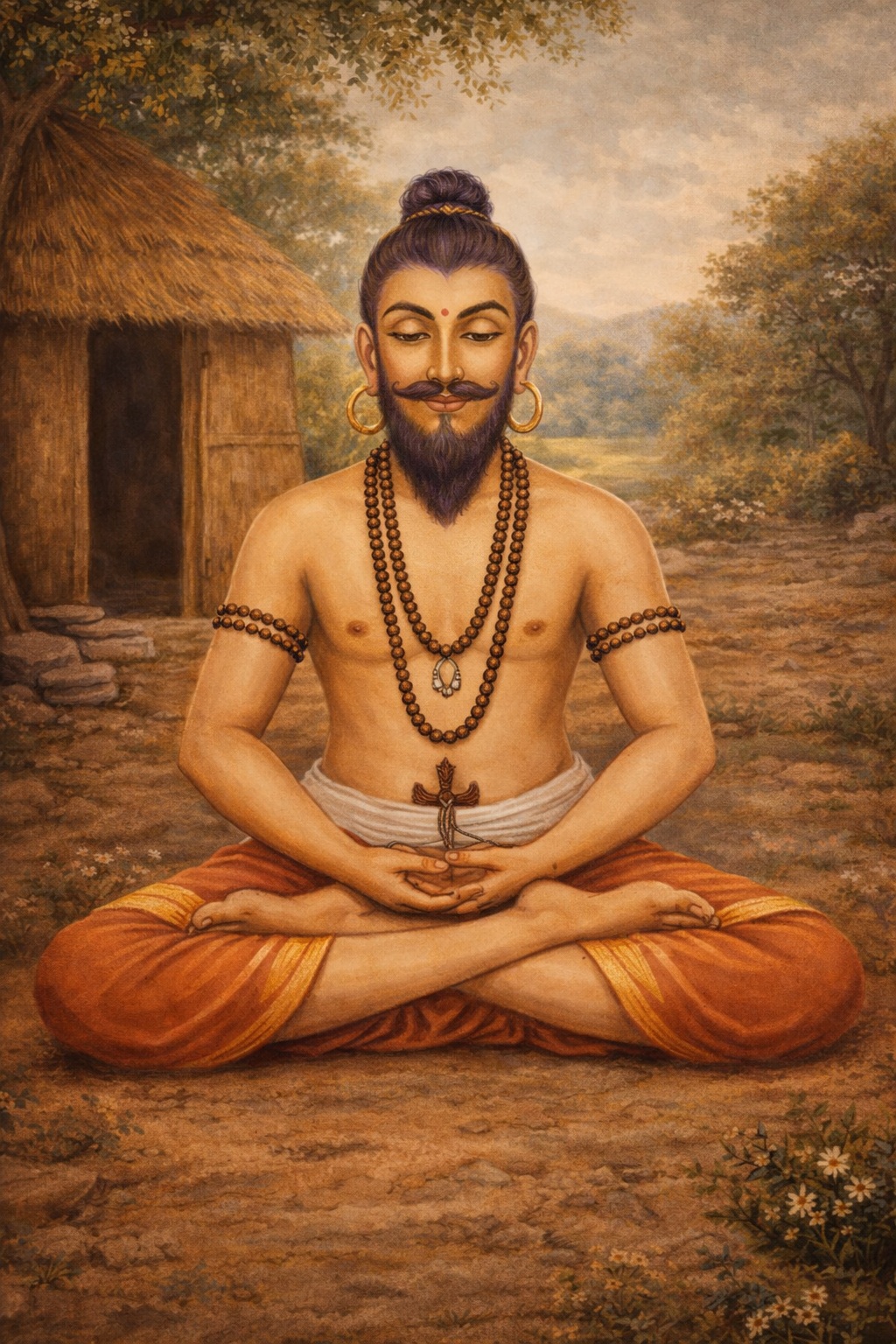
Swami Swatmarama
Swami Swatmarama is best known as the author of Hatha Yoga Pradipika, one of the most influential practical manuals in yoga history. By compiling earlier traditions into a coherent structure, he made advanced yogic techniques understandable and teachable for committed practitioners. His work became a bridge between esoteric lineage knowledge and wider instructional transmission.
He presented Hatha Yoga not as an isolated physical regimen, but as a preparatory and integral path toward higher meditative realization. Through balanced guidance on posture, breath, purification, and inner locks, he established a methodical approach that still shapes yoga education today. At MPYPCP, his ideal strengthens disciplined practice with scriptural grounding.
Swami Swatmarama, author of the Hatha Yoga Pradipika (15th century CE), compiled the practical canon of Hatha Yoga in four chapters: asana, pranayama, mudra-bandha, and samadhi. The text explicitly invokes Adinatha (Aadi Yogi Shiv), Maharshi Matsyendranath, and Maharaj Gorakshanath as lineage authorities (HYP 1.5–9) and states that Hatha is a ladder to Raja Yoga when practiced under qualified guidance. Swami Swatmarama prescribes fifteen principal asanas, eight kumbhakas, ten yamas-niyamas adapted for Hatha, and cleansing practices (shatkarma) as preparation for subtle absorption. Commentaries such as those of Brahmananda and Jyotsna clarify physiological and esoteric readings. As the most cited premodern operational manual of yoga, the Pradipika anchors academic and traditional teacher-training programs, including curricula that require scriptural literacy alongside physical instruction.
Life & Legacy
Swami Swatmarama contribution lies in organizing a practical canon that made Hatha Yoga transmissible across generations. His text offers clear progression and disciplined sequencing for aspirants.
Swami Swatmarama also highlighted the ethical and mental conditions required for effective practice. This reminds modern students that technique without discipline yields limited transformation.
Core Teachings
He taught that body and breath must be refined to support meditative stability. Techniques were presented as means for inner awakening, not ends in themselves.
His integrative method links cleansing practices, breath regulation, and energetic seals with contemplative absorption. The result is a complete pathway from preparation to depth.
Contribution to Yoga
Swami Swatmarama composed the Hatha Yoga Pradipika (15th century CE), the most influential medieval manual of Hatha Yoga, cited alongside Maharshi Patanjali's Yoga Sutras in virtually every YCB and international teacher-training manual. He systematized asana, shatkarma (cleansing), pranayama, mudra, bandha, and samadhi for dedicated practitioners.
His famous verse declares that Raja Yoga without Hatha is impossible for most, legitimizing physical preparation as a gateway to meditation. Techniques such as Nadi Shodhana, Ujjayi, Khechari, Viparita Karani, and descriptions of Ida–Pingala–Sushumna became standard in modern pranayama classes worldwide.
The Hatha Yoga Pradipika is translated into English, German, Japanese, and more; Bihar School of Yoga and Himalayan Institute curricula depend on it. On International Yoga Day, ministries and studios often demo its classic asanas, making Swami Swatmarama the household name linking ancient Hatha to gym-yoga globally.
Popular Yoga Contributions
- Author of Hatha Yoga Pradipika, bible of Hatha Yoga
- Fifteen classic asanas (e.g. Siddhasana, Padmasana)
- Shatkarma cleansing, neti, dhauti, basti, etc.
- Pranayama: Nadi Shodhana, Ujjayi, Bhastrika, Kumbhaka
- Mudras and bandhas, Mula, Uddiyana, Jalandhara, Viparita Karani
- Core text in YCB, Bihar School, and global 200-hour YTT
Relevance at MPYPCP
At MPYPCP, his model supports structured skill development, gradual advancement, and responsible instruction. Students are encouraged to practice with patience and precision.
MPYPCP uses his principles to align practical sessions with philosophical understanding. This ensures that learning remains authentic, safe, and transformative.
Authentic Sources & References
- Hatha Yoga Pradipika (four padas), systematic asana, pranayama, mudra, bandha, samadhi
- Opening verses (1.5–9), Nath lineage invocation; Hatha as preparation for Raja Yoga
- Hatha Pradipika commentaries (Brahmananda, Jyotsna), traditional exegesis and pedagogy
- Related corpus: Gheranda Samhita and Shiva Samhita, parallel classical Hatha manuals
- Modern translations (Mallinson, Akers), scholarly standards for historical Hatha studies
Key Highlights
- Author of the seminal Hatha Yoga Pradipika
- Systematized Asana, Pranayama, Mudra, and Bandha practices
- Linked physical discipline to meditative realization
- Preserved core Hatha methods for future generations
- Model for structured and responsible yoga instruction
स्वामी स्वात्माराम
स्वामी स्वात्माराम हठयोगप्रदीपिका के रचनाकार के रूप में विशेष रूप से प्रसिद्ध हैं, जो योगइतिहास के अत्यंत प्रभावशाली व्यावहारिक ग्रंथों में से एक है। उन्होंने पूर्ववर्ती परंपराओं का सार लेकर उसे सुसंगत रूप दिया, जिससे उन्नत योगविधियाँ गंभीर साधकों के लिए स्पष्ट और शिक्षणयोग्य बनीं। उनका कार्य गूढ़ परंपरागत ज्ञान और व्यापक शिक्षण परंपरा के बीच महत्वपूर्ण सेतु बना।
उन्होंने हठयोग को केवल शारीरिक अभ्यास नहीं माना, बल्कि उच्च ध्यानावस्था की तैयारी और साधना का अभिन्न मार्ग बताया। आसन, प्राणायाम, शोधन, मुद्रा और बन्ध पर उनके संतुलित निर्देश आज भी योगशिक्षा को क्रमबद्ध दिशा देते हैं। एमपीवाईपीसीपी में उनका आदर्श शास्त्रीय आधार के साथ अनुशासित अभ्यास को सुदृढ़ करता है।
स्वात्माराम, हठयोगप्रदीपिका (१५वीं शती ई.) के रचयिता, ने चार अध्यायों में हठयोग की व्यावहारिक परम्परा संकलित की: आसन, प्राणायाम, मुद्रा-बन्ध, समाधि। ग्रंथ आदिनाथ, महर्षि मत्स्येन्द्रनाथ और गोरक्ष को परम्परा-प्रामाणिक आचार्य मानता है (१.५–९) और कहता है कि योग्य मार्गदर्शन में हठ राजयोग की सीढ़ी है। पन्द्रह मुख्य आसन, आठ कुम्भक, शट्कर्म और समाधि-तैयारी का विधान यहाँ मिलता है। ब्रह्मानन्द और ज्योत्स्ना टीकाएँ शारीरिक और गूढ़ दोनों स्तर स्पष्ट करती हैं। आधुनिक शिक्षक-प्रशिक्षण और शैक्षणिक योग-अध्ययन में प्रदीपिका सर्वाधिक उद्धृत प्राचीन कार्य-नियम ग्रंथ है।
जीवन और विरासत
स्वामी स्वात्माराम का प्रमुख योगदान यह है कि उन्होंने हठयोग की व्यावहारिक विधियों को ऐसा क्रम दिया जो पीढ़ियों तक सुलभ रूप में संप्रेषित हो सके। उनका ग्रंथ साधकों के लिए स्पष्ट प्रगति-पथ प्रस्तुत करता है।
स्वामी स्वात्माराम ने यह भी स्पष्ट किया कि सफल साधना के लिए नैतिकता और मनोअनुशासन आवश्यक हैं। इससे आधुनिक साधक समझता है कि अनुशासन के बिना तकनीक सीमित परिणाम देती है।
मूल शिक्षाएँ
उन्होंने बताया कि शरीर और श्वास का परिष्कार ध्यानस्थिरता के लिए अनिवार्य है। उनके अनुसार तकनीकें अंतिम लक्ष्य नहीं, बल्कि आंतरिक जागरण के साधन हैं।
उनकी समेकित पद्धति शोधन, प्राणसंयम और बन्ध-मुद्रा को ध्यानगहनता से जोड़ती है। इस प्रकार साधना तैयारी से लेकर आंतरिक गहराई तक पूर्ण मार्ग बन जाती है।
योग में योगदान
स्वामी स्वात्माराम ने हठ योग प्रदीपिका (15वी शताब्दी ई.) रची, मध्यकालीन हठयोग की सर्वाधिक प्रभावशाली नियमावली, जो लगभग हर YCB और अंतर्राष्ट्रीय शिक्षक-प्रशिक्षण पुस्तिका में महर्षि पतंजलि के योगसूत्रों के साथ उद्धृत होती है। उन्होंने आसन, षट्कर्म, प्राणायाम, मुद्रा, बंध और समाधि को समर्पित साधकों के लिए व्यवस्थित किया।
उनका प्रसिद्ध वचन कि हठ के बिना राजयोग अधिकांश के लिए असंभव है, शारीरिक तैयारी को ध्यान के द्वार के रूप में वैध किया। नाड़ी शोधन, उज्जयी, खेचरी, विपरीत करणी और इडा–पिंगला–सुषुम्णा का वर्णन विश्वभर की प्राणायाम कक्षाओं में मानक बना।
हठ योग प्रदीपिका अंग्रेजी, जर्मन, जापानी आदि में अनुवादित; बिहार स्कूल ऑफ योग और हिमालयन इंस्टिट्यूट के पाठ्यक्रम इस पर निर्भर हैं। अंतर्राष्ट्रीय योग दिवस पर मंत्रालय और स्टूडियो अक्सर इसके क्लासिक आसन प्रदर्शित करते हैं, स्वामी स्वात्माराम प्राचीन हठ को वैश्विक जिम-योग से जोड़ने वाला नाम।
लोकप्रिय योग योगदान
- हठ योग प्रदीपिका के रचयिता, हठयोग की मुख्य ग्रंथ
- पंद्रह क्लासिक आसन (जैसे सिद्धासन, पद्मासन)
- षट्कर्म शुद्धि, नेति, धौति, बस्ति आदि
- प्राणायाम: नाड़ी शोधन, उज्जयी, भस्त्रिका, कुम्भक
- मुद्रा और बंध, मूल, उड्डियान, जालन्धर, विपरीत करणी
- YCB, बिहार स्कूल और वैश्विक 200-घंटे YTT का आधार ग्रंथ
MPYPCP में प्रासंगिकता
एमपीवाईपीसीपी में उनका आदर्श क्रमिक कौशल-विकास, सावधानीपूर्ण उन्नति और उत्तरदायी शिक्षण को प्रेरित करता है। विद्यार्थियों को धैर्य और शुद्धता के साथ अभ्यास करने का प्रशिक्षण दिया जाता है।
एमपीवाईपीसीपी उनके सिद्धांतों के आधार पर व्यावहारिक कक्षाओं को दार्शनिक समझ से जोड़ता है, जिससे शिक्षण प्रामाणिक, सुरक्षित और रूपांतरणकारी बना रहता है।
प्रामाणिक स्रोत और संदर्भ
- हठयोगप्रदीपिका (चार पाद), आसन, प्राणायाम, मुद्रा, बन्ध, समाधि
- प्रारंभिक श्लोक (१.५–९), नाथ परम्परा; राजयोग हेतु हठ
- प्रदीपिका टीकाएँ (ब्रह्मानन्द, ज्योत्स्ना), पारंपरिक व्याख्या
- संबद्ध ग्रंथ: घेरण्ड संहिता, शिव संहिता, समकालीन हठ नियम
- आधुनिक अनुवाद, ऐतिहासिक हठ-अध्ययन के मानक
मुख्य बिंदु
- हठयोगप्रदीपिका के विख्यात रचनाकार
- आसन, प्राणायाम, मुद्रा और बन्ध का क्रमबद्ध निरूपण
- शारीरिक अनुशासन को ध्यानानुभूति से जोड़ा
- हठयोग की मूल विधियों का दीर्घकालिक संरक्षण
- संरचित और उत्तरदायी योगशिक्षण के आदर्श